- Start
- Our offer
- Research projects
- Transport
- Urban densification and parking areas
Urban densification and parking areas
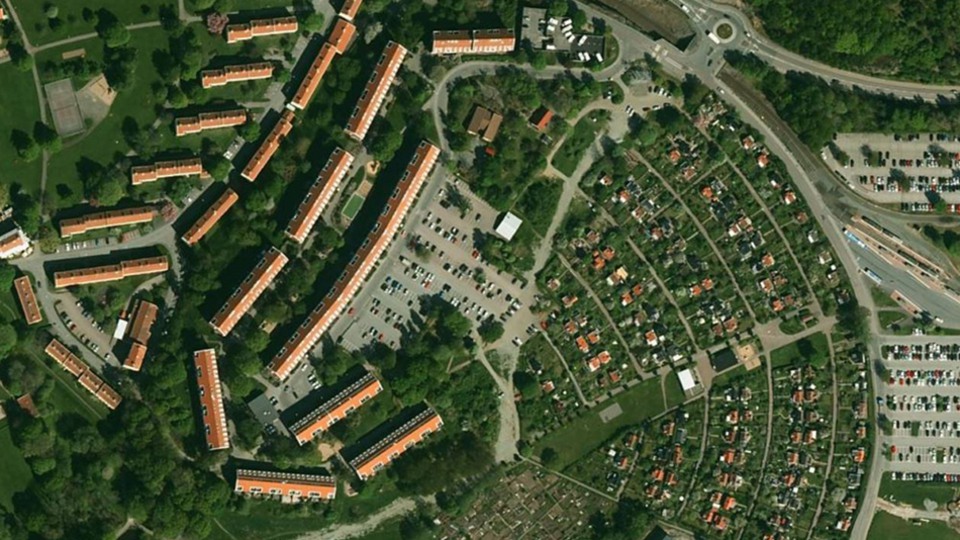
What opportunities are there for shared use of parking spaces and mobility services in Swedish cities when residential areas become denser? In the SamPark Project, IVL Swedish Environmental Institute, together with the municipal housing company group Framtiden AB, has contributed knowledge about construction with efficient land use, low resource use and structures that support sustainable travel.
The project has used the Framtiden Group's real estate company as an example and study object during the project. The research project has developed new knowledge and recommendations that can be used in Gothenburg and comparable cities.
Focus areas in the project:
- Efficient land use, low resource use and structures for sustainable travel.
- Lower costs for building homes.
- Design homes, parking spaces and mobility services in a way that contributes to sustainable travel and reduced environmental effects.
- Study business models and opportunities to achieve goals in municipal traffic strategies, climate strategies and environmental programs.
Related publications:
-
Our offer
- Digital services
- International
- Our focus areas
- Our services
-
Research projects
- Circular flows
- Consumption and production
-
Transport
- Accelerating the climate transition in port-related road freight
- Baltic Sea Green Shipping Corridors
- Business models for hydrogen
- Capacity-building for sustainable transport in Västra Götaland
- CARES measures traffic emissions to improve urban air quality management
- Conditions for renewable gasoline
- Environmental risk assessment of dredged material disposal
- EU Emission Trading System
- Expectations and displacement effects of electrifying municipal transportation
- FEMAR - the impact of EU policy on the shipping sector
- H2AMN hydrogen-based solutions for ports
- HoMoSE
- HOPE
- How can electrified transport support crisis response
- Knowledge base for renewable fuels in shipping
- Kollakoll
- KomPark - Municipal parking instruments for energy-efficient cities
- LEARN measures freight chain emissions
- Location-based impact model mobility
- Mackdeath - when the last petrol station closes
- Mass balance in the freight transport market
- Monitoring and controlling emissions from shipping
- Multi Filling stations
- NOx-emissions from shipping in real operation
- Optimization of flight routes for reduced climate impact
- Pathways to fossil-free freight transport
- POTUS
- Recoil effects and design of control means
- Residual products from the paper industry are being turned into fuel
- Reverse the thinking for better accessibility
- Shifting to a low carbon transport system
- STORM
- uCARe: Tool to reduce vehicle fleet emissions
- Urban densification and parking areas
- Digitalization
- Climate
- Energy
- Water
- Air
- Sustainable urban planning
- Work environment
- Bio-diversity
- Forest
- Chemicals
- Procurement
- Food
- PFAS
- Urban greenery
- Soil
- Environmental data
- Plastic
- Strategic sustainability work
- Textile
- About IVL
- Publications
- Career
Last updated: 2021-08-11
-
Our offer
- Digital services
- International
- Our focus areas
- Our services
-
Research projects
- Circular flows
- Consumption and production
-
Transport
- Accelerating the climate transition in port-related road freight
- Baltic Sea Green Shipping Corridors
- Business models for hydrogen
- Capacity-building for sustainable transport in Västra Götaland
- CARES measures traffic emissions to improve urban air quality management
- Conditions for renewable gasoline
- Environmental risk assessment of dredged material disposal
- EU Emission Trading System
- Expectations and displacement effects of electrifying municipal transportation
- FEMAR - the impact of EU policy on the shipping sector
- H2AMN hydrogen-based solutions for ports
- HoMoSE
- HOPE
- How can electrified transport support crisis response
- Knowledge base for renewable fuels in shipping
- Kollakoll
- KomPark - Municipal parking instruments for energy-efficient cities
- LEARN measures freight chain emissions
- Location-based impact model mobility
- Mackdeath - when the last petrol station closes
- Mass balance in the freight transport market
- Monitoring and controlling emissions from shipping
- Multi Filling stations
- NOx-emissions from shipping in real operation
- Optimization of flight routes for reduced climate impact
- Pathways to fossil-free freight transport
- POTUS
- Recoil effects and design of control means
- Residual products from the paper industry are being turned into fuel
- Reverse the thinking for better accessibility
- Shifting to a low carbon transport system
- STORM
- uCARe: Tool to reduce vehicle fleet emissions
- Urban densification and parking areas
- Digitalization
- Climate
- Energy
- Water
- Air
- Sustainable urban planning
- Work environment
- Bio-diversity
- Forest
- Chemicals
- Procurement
- Food
- PFAS
- Urban greenery
- Soil
- Environmental data
- Plastic
- Strategic sustainability work
- Textile
- About IVL
- Publications
- Career