- Start
- Our offer
- Research projects
- Water
- Status and management of Swedish bivalve populations
Status and management of Swedish bivalve populations
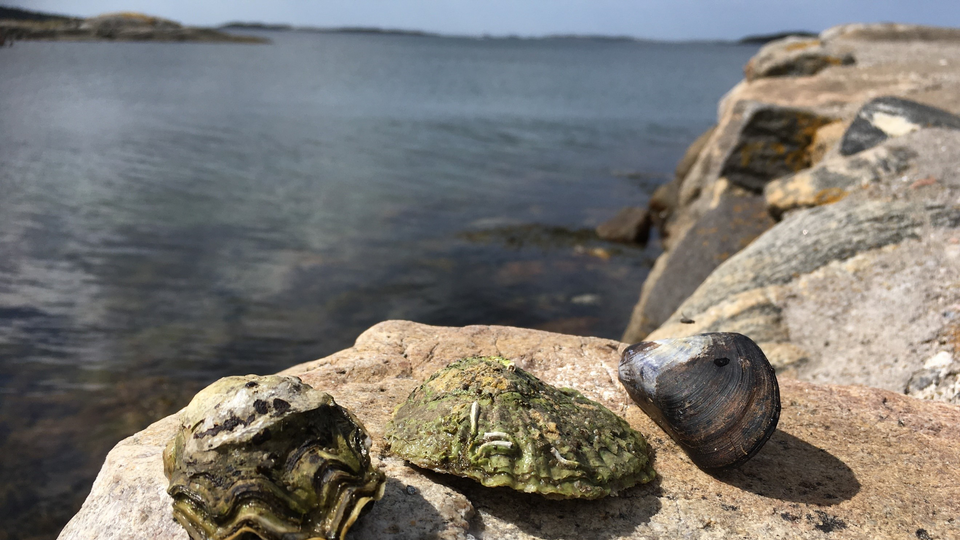
In recent years, blue mussel populations have declined in many parts of the world including in Europe. Observations indicate a similar trend in Sweden, but knowledge of the historical and current distribution of blue mussels as well as oysters in Sweden is limited.
Mussel and oyster beds are important habitats for many other species in coastal ecosystems. IVL investigates the status of the Swedish bivalve populations, including identifying possible threats and evaluating methods for how to protect and manage bivalve populations.
In the “Bivalve project” IVL gathers knowledge for assessing the biological value of bivalve populations by mapping historical and current distribution and analyzing genetic variation between different local populations. The project also evaluates different management methods to strengthen native bivalve populations and investigates how alien species, such as the Pacific oyster (Magallana gigas), may impact native bivalve populations.
Researchers in Europe believe that the decline in blue mussels is due to climate change rather than competition with alien species. But knowledge is limited about how the Pacific oyster affects the native oyster (Ostrea edulis), which is also being investigated in the project.
The results from the project will form an important basis for developing sustainable management plans for oyster and mussel populations in Sweden.
-
Our offer
- Digital services
- International
- Our focus areas
- Our services
-
Research projects
- Air
- Bio-diversity
- Chemicals
- Circular flows
- Climate
- Digitalization
- Energy
- Environmental data
- Food
- Forest
- PFAS
- Plastic
- Procurement
- Soil
- Strategic sustainability work
- Sustainable consumption
- Sustainable production
- Sustainable urban planning
- Textile
- Transport
- Urban greenery
-
Water
- Aquaculture in a changing climate
- AquaVitae: Sustainable aquaculture around the Atlantic
- Authorization and monitoring of low-trophic aquaculture
- Better decisions for drinking water protection
- CityAirSim will show how traffic, greenery and dense construction affect the city air
- CoastConnect
- DEMASK
- Development of PAK-MBR for purification of micro-pollutants
- Digital twins for innovations in water purification
- eDNA-based environmental monitoring in aquaculture
- ETRIC
- FLOWSAFE – Reducing pollution in water and sediments after floods
- InciteShip – An incentive to reduce underwater noise from ships
- IN CYCLE – Resource recovery from industrial wastewater
- Innovative water treatment
- Investigation of greenhouse gases in Swedish fiberbanks
- IoT for sustainable water management
- Low trophic aquaculture species in a changing climate
- More efficient water management in the process industry
- Nordic Solutions in Sewage & Sludge Treatment and MSW for India
- Open waters
- Pilot Henriksdal 2040 (pH2040)
- Practical criticality analysis for water and wastewater facilities
- Rich Waters: Cooperation for Better Water
- SEADEEP sustainable blue bioeconomy
- ShrimpNoise
- Smart sustainable water management in big cities
- Status and management of Swedish bivalve populations
- Support climate ‘shift’ and governance in the WASH Sector
- Sustainable water resource management
- Swedish program for oyster hatchery and grow-out
- Technological developments in Pacific oyster cultivation
- Test bed Storsudret
- Towards a Next Generation of Water Systems and Services for the Circular Economy
- Underwater noise from fairways
- Water flow measurement with drone
- Water Flow Plan
- Water Wise Societies
- What are mussels and oysters really eating?
- Zero PFAS II
- Work environment
- About IVL
- Publications
- Career
-
Our offer
- Digital services
- International
- Our focus areas
- Our services
-
Research projects
- Air
- Bio-diversity
- Chemicals
- Circular flows
- Climate
- Digitalization
- Energy
- Environmental data
- Food
- Forest
- PFAS
- Plastic
- Procurement
- Soil
- Strategic sustainability work
- Sustainable consumption
- Sustainable production
- Sustainable urban planning
- Textile
- Transport
- Urban greenery
-
Water
- Aquaculture in a changing climate
- AquaVitae: Sustainable aquaculture around the Atlantic
- Authorization and monitoring of low-trophic aquaculture
- Better decisions for drinking water protection
- CityAirSim will show how traffic, greenery and dense construction affect the city air
- CoastConnect
- DEMASK
- Development of PAK-MBR for purification of micro-pollutants
- Digital twins for innovations in water purification
- eDNA-based environmental monitoring in aquaculture
- ETRIC
- FLOWSAFE – Reducing pollution in water and sediments after floods
- InciteShip – An incentive to reduce underwater noise from ships
- IN CYCLE – Resource recovery from industrial wastewater
- Innovative water treatment
- Investigation of greenhouse gases in Swedish fiberbanks
- IoT for sustainable water management
- Low trophic aquaculture species in a changing climate
- More efficient water management in the process industry
- Nordic Solutions in Sewage & Sludge Treatment and MSW for India
- Open waters
- Pilot Henriksdal 2040 (pH2040)
- Practical criticality analysis for water and wastewater facilities
- Rich Waters: Cooperation for Better Water
- SEADEEP sustainable blue bioeconomy
- ShrimpNoise
- Smart sustainable water management in big cities
- Status and management of Swedish bivalve populations
- Support climate ‘shift’ and governance in the WASH Sector
- Sustainable water resource management
- Swedish program for oyster hatchery and grow-out
- Technological developments in Pacific oyster cultivation
- Test bed Storsudret
- Towards a Next Generation of Water Systems and Services for the Circular Economy
- Underwater noise from fairways
- Water flow measurement with drone
- Water Flow Plan
- Water Wise Societies
- What are mussels and oysters really eating?
- Zero PFAS II
- Work environment
- About IVL
- Publications
- Career