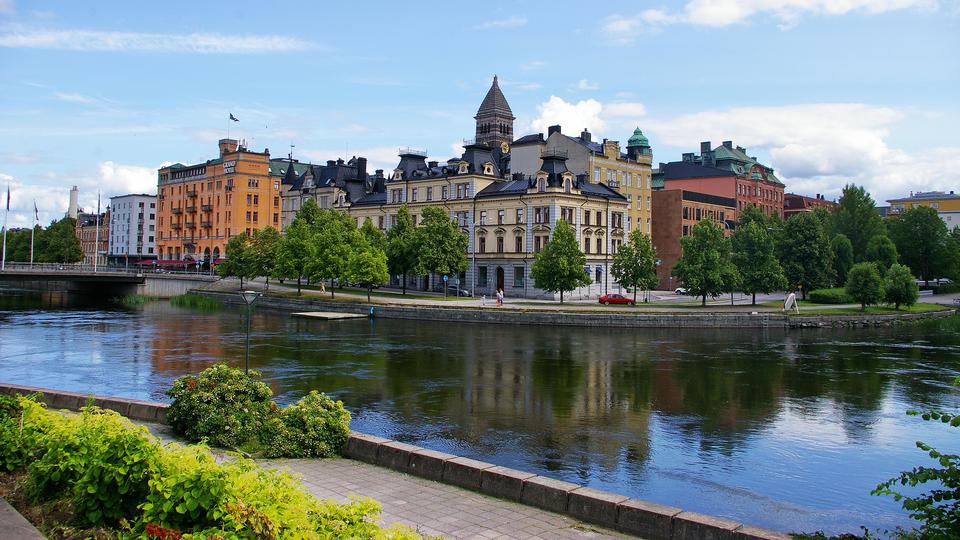
Among Sweden’s municipalities, Norrköping took first place in this year’s ranking.
Climate adaptation is urban and regional planning – not crisis management
Climate change is no longer a future threat – it is a present reality affecting people, communities and ecosystems. The scale of damage and costs from extreme weather is largely determined by our ability to adapt as a society, and municipalities play a key role in this work.

Magnus Hennlock
The latest survey conducted in 2025 by IVL Swedish Environmental Research Institute and Insurance Sweden shows that Swedish municipalities’ preparedness to manage the impacts of climate change needs to be strengthened.
The latest survey conducted in 2025 by IVL Swedish Environmental Research Institute and Insurance Sweden shows that Swedish municipalities’ preparedness to manage the impacts of climate change needs to be strengthened.
“It is concerning that many municipalities only take action after being affected by damage caused by extreme weather and climate change. They risk having to carry out both emergency and more costly measures,” says Magnus Hennlock, group leader and researcher at IVL Swedish Environmental Research Institute.
There are significant differences in how far municipalities have progressed in terms of climate adaptation. In particular, smaller municipalities are lagging behind in this effort, which may be due to limited resources and a lack of expertise needed to address these issues. Here, the county administrative boards paly an important role in monitoring and identifying which municipalities need support.
All municipalities need to identify and understand their risks and vulnerabilities. This is necessary for them to
be able to prioritise the right measures,
says Magnus Hennlock.
A common feature among many of the leading municipalities is that they have made political decisions to work on climate adaptation and then allocated resources to this work.
The report highlights clear shortcomings
A first step is to develop a concrete climate adaptation plan for the municipality and implement measures in accordance with that plan. The plan should clearly state what needs to be done and when. It is also important that climate adaptation is integrated into municipal planning processes – such as comprehensive plans, detailed development plans, water and wastewater plans and emergency preparedness plans.
Climate adaptation is urban and regional planning, not crisis management. Sweden’s municipalities need to shift from reactive to proactive climate adaptation work.
Magnus Hennlock
It has been ten years since IVL and Insurance Sweden conducted the first survey of municipalities’ climate adaptation efforts. Since then, progress has been made, but not quite fast enough, as several extreme weather events in recent years have clearly shown across many municipalities.
This year’s report highlights both positive examples and clear shortcomings, but the overall picture is that the pace of climate adaptation needs to increase,
says Magnus Hennlock

Contributes to the UN Global Goals