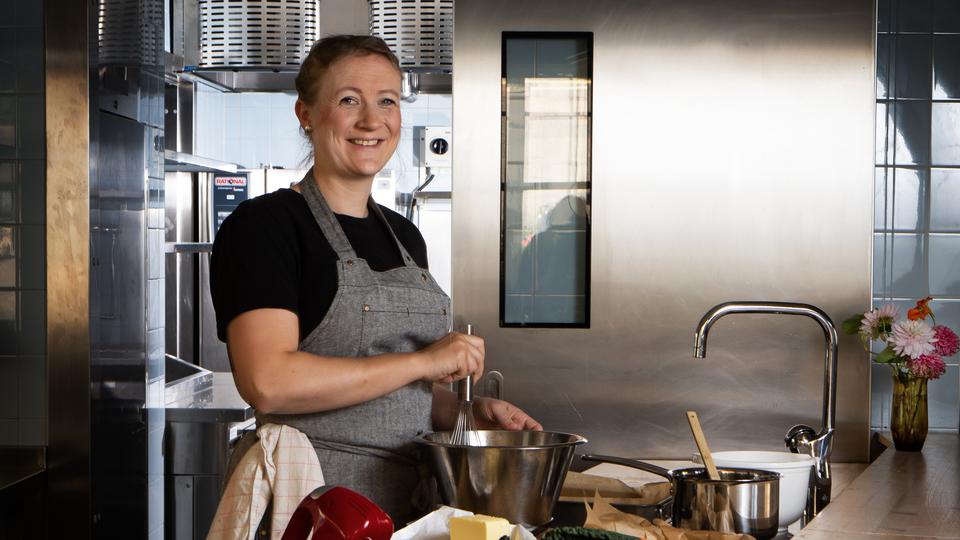
Beef blood is one of our most underutilised ingredients. Here, IVL researcher Elvira Molin substitutes blood for eggs when baking muffins.
From waste to resource – a brownie baked with blood became the talk of the town during the year
Almost a third of all food produced globally is currently lost along the food supply chain. To make use of these untapped resources, IVL Swedish Environmental Research Institute is, in collaboration with Axfoundation and other partners, running the Blood and Turnip project. This autumn, the project introduced a brand new product – an innovative baked good – which made its way into retail shops and became an unexpected conversation starter.
We want to show how materials that would otherwise go to waste can be used to create new, nutritious and sustainable foods
says Emma Moberg, researcher and project manager at IVL.
In the research and innovation project Blood and Turnip, various side streams from both animal and plant-based sources have been mapped. But it was the potential of blood that was most surprising. Beef blood is one of our most underutilised ingredients. Despite its high nutritional content, it is currently used mainly for biogas or animal feed.
Research on blood as a food ingredient is currently relatively limited, but early tests showed that blood has good potential for use in food products and can, for example, replace eggs and significantly increase iron content
says Elvira Molin, researcher and project manager at IVL.
Results that stood out
Through the Blood and Turnip project, this overlooked resource has been given a new life. At Axfoundation’s testing and development centre, Torsåker Farm, chefs, meal ecologists, sensory experts and nutritionists developed several prototypes based on side streams. After intensive product development, the brownie stood out. It is baked with 20 per cent Swedish beef blood and is rich in haem iron – the form of iron that the body absorbs most easily. In parallel, researchers at IVL were responsible for analysing material flows, risks and environmental benefits to ensure that the products are both safe and sustainable.
Blood has similar properties to eggs and causes mixtures to coagulate when heated. During our product development, we noted how well the colour and flavour of chocolate complement the properties of blood. The blood gives the chocolate a richer flavor. An added bonus is that it hides the colour of the blood, which would otherwise turn everything black. It works perfectly well to make pancakes with blood instead of eggs, but we are not used to eating black pancakes,
says Sofia Lundvall, chef and sensory scientist at Torsåker Farm.
Iron deficiency is a common problem, especially among girls. We believe in boosting different types of foods with blood, which is rich in iron that can be absorbed efficiently – and they also have to be foods that people can actually imagine eating in everyday life
says Veronica Öhrvik, project manager at Axfoundation, who has been responsible for product development.
When the blood brownie was launched at Pressbyrån’s PBX test lab in Stockholm last autumn, it quickly became one of the best-selling products – with a particularly strong following among younger consumers.
It’s an unexpected product. The name stands out, it tastes good, and the concept is based on research and addresses several current challenges. Elvira Molin
A step toward a more sustainable food culture
Emma Moberg
For project managers Elvira Molin and Emma Moberg, collaboration with researchers, chefs and sensory scientists has been an important part of the project. Discussions with public kitchens in schools and elderly care – the project’s primary target groups – have also provided valuable insights into how complex it is to introduce new foods into Swedish food culture and public kitchens, even when they are both nutritious
and sustainable.
The main barriers are not taste or nutrition, but rather resistance linked to our emotions and cultural norms. We need more stories and concrete examples of what the food of the future might look like – solutions that aren’t based on artificial alternatives, but that make use of everything we already have but aren’t using,
says Elvira Molin.
In addition to the blood brownie, the project also developed a meat product in which a small proportion of the meat was replaced with kidney, as well as fermented carrots and products made from apple pomace. The blood brownie was one of the most promising – and a concrete example of how side streams can be turned into something flavourful, nutritious and sustainable.
Looking ahead, the team wants to continue working with both blood and other side streams – and scale up the use of residual flows in public kitchens, restaurants and retail shops.
It is a huge waste of resources that so much food goes unused, both economically and environmentally – and it also undermines food security and preparedness. We have demonstrated that it is possible to develop interesting new food products. Now it's about increasing access, demand, and the willingness to try new things,
says Emma Moberg.
Contributes to the UN Global Goals