
- Start
- Our offer
- International
- WASH
- Projects

WASH projects
IVL manages a large number of WASH projects, programmes, and platforms around the world. With our unusually diverse expertise, we offer advice on a broad range of water-related issues, sometimes together with other leading organizations and strategic partners.
The work at IVL WASH Governance focuses on water, sanitation and hygiene. The IVL WASH Governance team was previously part of SIWI (Stockholm International Water Institute), and has been incorporated into IVL's international work since 2025.
Read more about our projects below.
WASH Governance group process supported with Unicef, 2025
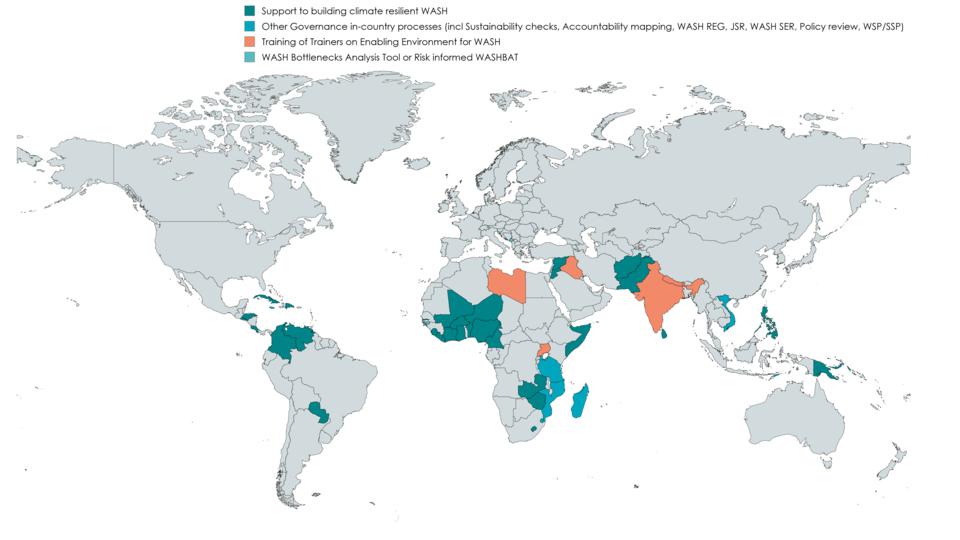
Governance and capacity development
WASH Systems strengthening
Achieving universal, sustainable, and safe access to water, sanitation and hygiene requires that all those who deliver, maintain, and improve access to services work well together. Strengthening WASH systems is about improving the capacity of all parts of systems - people, ecosystems, infrastructures, institutions, resources, and processes - to play their roles adequately, and enhancing the quality of their interactions.
IVL develops evidence-based solutions to build and sustain strong WASH systems. Together with our international partners, we nurture ideas on strategies and tools, and help deliver transformational changes for more resilient, sustainable, and equitable WASH services. We advocate for cohesive approaches to WASH services, facilitate assessments of systemic bottlenecks to services, and strengthen capacities to achieve long-term transformations.
It takes more than infrastructures to deliver water, sanitation, and hygiene. The performance of services depends on a complex network of skilled people at all levels, healthy water sources, efficient and adequately financed processes, and strong institutions. Sector performances also depend on the macro environment in the country. An Enabling Environment for effective and sustainable WASH service delivery is a setting in which governance effectively supports and organises services, in coherence with the structural, institutional, and socio-political context.
At IVL, we develop and implement specialized tools that serve as catalysts for the creation of enabling WASH environments.
With the implementation of WASH Bottleneck Analysis Tool, IVL contributes to designing successful WASH interventions that build on a good understanding of the environment of WASH services. We also actively pioneer and evolve this tool to continually address the ever-changing needs of the sector.
Three types of WASH Regulation (WASH REG) developed by the IVLs partnership with UNICEF “Accountability for Sustainability” (under SIWI) are available to WASH practitioners to help advance regulation in their WASH sector: a conceptual overview External link, opens in new window., an assessment methodology External link, opens in new window. and action-sheets.
The Service Delivery Model tool External link, opens in new window. (WASH-SER) developed recently, is a participatory process that assesses all the components of the service delivery model, identifying its strengths and weaknesses, and produces a roadmap of activities to address existing gaps and bottlenecks, and support the service. Read more about WASH-SER in the section below.
WASH Capacity Development methodology External link, opens in new window. developed aims at providing water practitioners with a step-by-step process External link, opens in new window. to design a participatory intervention for capacity development. See further info in the WASH Capacity Development section below.
Accountability
Accountability is a key catalyst of progress towards more equitable and sustainable WASH service delivery. Good WASH programming requires stakeholders in service delivery to be able to both provide and demand good services. As the sustainability of investments remains a pressing issue in WASH, the need for a greater stakeholder cooperation is on the rise. This calls for building the capacity not only of those with obligations but also of those with rights to work together for just and sustainable access to water and sanitation.
IVL’s partnership with UNICEF “Accountability for Sustainability” has helped bring accountability into WASH programming mainstream since 2014 (under SIWI). This pioneering work has operationalised the notion of accountability and made it a powerful entry point to effectively improve WASH services.
The implementation of the WASH accountability mapping tool External link, opens in new window. has proven to be an enlightening experience for thousands of participants, empowering them with newfound understanding of their WASH context.
Promoting accountability is particularly vital in fragile operational settings. Our works on WASH accountability in fragile contexts External link, opens in new window. shows that investments in basic service delivery must be complemented by strategies to improve the quality of relationships among actors of the WASH sector. This will create trust, and it is a source of legitimacy for the state, all key conditions for better, more sustainable service delivery.
Sustainability
The failure of water and sanitation services to deliver lasting benefits is one of the greatest threats to the achievement of universal access to WASH. Intermittent or low-quality water services have dramatic impacts on the present well-being and dignity of communities and compromises the future of children.
At IVL, we place the sustainability of services at the centre of our work. Together with partners, we co-create solutions that address the root causes of unsustainability. These solutions contribute to more effective institutional support to service provision, address the systemic barriers that constrain progress on sustainability, and improve accountability in service delivery.
Within the partnership “Accountability for Sustainability”, IVL supports UNICEF’s efforts to include sustainability at all stages of the WASH programming cycle.
The framework “Programming for Sustainability External link, opens in new window.” spotlights tools and approaches that support the long-term outcomes of programmes through a better governance of WASH services.
A new generation has of Sustainability Check External link, opens in new window. is now implemented a sector level (sustainability monitoring tool External link, opens in new window.), to measure and improve the outcomes of UNICEF WASH programming over time. The new tool provides guidance for designing and implementing sector-wide sustainability checks, rather than project-based assessments, and broaden the lens to include climate change and address sustainability challenges in urban settings.
WASH Systems Strengthening
Period: May 2025 – December 2027
Budget: Not applicable (multi-project)
Funded by: UNICEF
Project partners: UNICEF, IVL
For more information, contact:
Hélène Le Deunff, Expert, helen.ledeunff@ivl.se
Develop a groundwater governance tool for West Africa
Groundwater underpins water security in West Africa, providing reliable drinking, agricultural, and livestock supply, especially amid climate variability. Over 50% of Sub Sahara Africa’s population depends on it, yet 70% remain without safely managed services due to underdeveloped or failing infrastructure. Compared with surface water, groundwater offers greater drought resilience and stability. Agricultural demand is rising sharply, with SDG 2 and AU targets requiring irrigation expansion.
Despite its potential, most countries use less than 25% of renewable groundwater. Brittish Geological Survey (BGS) analysis shows capacity remains high, but weak governance, limited institutional capacity, and complex hydrogeology constrain effective management and sustainable utilisation. Few studies have addressed these challenges in the region, highlighting the need for governance systems tailored to Africa’s specific physical, institutional, and use contexts. The proposed Groundwater Governance Tool responds to this by offering a structured approach to identify management needs and existing groundwater governance structures, with potential for future piloting and capacity development.
This project aims to develop a tool that will enable government agencies to establish a tailored governance system for sustaining the socioeconomic benefits of their groundwater resources. The tool will integrate three key dimensions:
Hydrogeological conditions – including aquifer type, productivity, storage, recharge, water quality, and vulnerability to over-extraction or contamination.
Institutional landscape – encompassing the mandates, capacities, and behaviours of actors at local, regional, and national levels.
Water uses – which define quality and quantity requirements, and determine monitoring needs across sectors such as domestic supply, agriculture, and livestock.
By aligning governance design with these factors, the tool will enable the development of context-specific systems for monitoring, management, and regulation — targeting the most critical groundwater risks.
Development of a Groundwater Governance Tool for West Africa
Period: 2025-03-25 to 2026-03-01
Budget: 119,000 Euros
Funded by: BGR
Project partners: IVL, SIWI, BGS, UNICEF
For more information, contact:
Tom Heath, Manager, tom.heath@ivl.se
Capacity development for water: WASH CAP methodology
It is widely known that many of the challenges of water and WASH management in developing countries can be attributed to the low level of individual, organization and institutional capacities. Through a concept note defining the problem to a step-by-step guide, IVL WASH Governance group has developed tools and methodologies for correctly diagnosing the capacity gaps and create a plan to overcome them.
The methodology External link, opens in new window. developed by IVL WASH Governance group aims at providing water practitioners with a step-by-step process External link, opens in new window. to design a participatory intervention for capacity development. The process starts with an adequate engagement with the right stakeholders (target group and decision makers). As a second step, it facilitates the target group's self-assessment of their capacity needs against their optimal performance. Following the results of this assessment, it supports the formulation of a capacity development plan to satisfy those needs, continues with its implementation and finalizes with the monitoring, evaluation, and learning from the experience. Individual, organizational or institutional capacity development interventions are not a one-off intervention but an iterative process of design, application, assessment, learning, and adjustment. The UNDP captures External link, opens in new window. capacity development in a five-step process cycle. IVL's approach follows this process cycle, and adapts it to the water institutions and characteristics. This methodology has been successfully tested and applied in Haiti, and is at its initial stages in Madagascar and Benin.
Capacity Development for Water. WASH CAP Methodology
Period: Fistly implemented in 2021-2. Under the UNICEF LAC agreement (Haiti) and the UNICEF WCARO Agreement (Benin) – and Global UNICEF agreement (Madagascar)
Budget: Total budget for the implementation in Haiti: 900,000 SEK (90,000 USD)
Funded by: UNICEF, Sida
Project partners: UNICEF, SIDA
For more information, contact:
Virginia Mariezcurrena, Manager, virginia.mariezcurrena@ivl.se
WASH-Ser: A tool for service delivery analysis in WASH
As part of his partnership with UNICEF, IVL developed the WASH-Ser tool, a structured methodology for analyzing water and sanitation service provision. It provides a consistent framework to evaluate service levels, identify gaps, and guide improvements in policy, planning, and implementation.
Achieving universal access to safe water and sanitation requires not only infrastructure but also reliable, efficient, and sustainable service provision. In many countries, context and institutional arrangements make it difficult to compare service providers’ performance, identify weaknesses, and plan effectively. To address this gap, UNICEF tasked SIWI and IVL with developing a harmonized methodology for service delivery analysis.
The WASH-Ser tool External link, opens in new window. examines both context and practices of service delivery and brings them together in a clear assessment framework. This enables governments, regulators, and development partners to identify performance gaps, prioritise interventions, and strengthen accountability.
Piloted in several countries, the tool has proven adaptable to different institutional and data environments. The WASH-Ser methodological guide is designed as a practical resource to inform advocacy, guide policy reforms, and support the development of sustainable WASH services.
Water, Sanitation and Hygiene Service Delivery Models tool (WASH-Ser)
Period: 2017-2025
Funded by: UNICEF,
Project partners: IVL, Stockholm International Water Institute
For more information, contact:
Bruno Le Bansais, Manager, bruno.lebansais@ivl.se
Support to youth: Youth for water and climate governance program
The Youth for Water and Climate Governance Program is an initiative of the IVL WASH Governance Group. It is designed for young people aged 15 to 25 from Latin America and the Caribbean who are passionate about water, climate, and policy. The program seeks to strengthen the role of youth in decision-making processes by equipping them with knowledge, tools, and mentorship to influence water and climate governance.
Over six months, participants engaged in a combination of technical training and personalized mentorship with our WASH Group experts. The curriculum covered foundational concepts in water governance and the interconnections between water, the environment, and climate change.
In parallel, young participants developed their own advocacy projects or strategies geared toward influencing local or regional decision-making processes – such as climate adaptation plans, watershed management, or water-related legislation. As part of continuous peer learning, they presented lessons learned, challenges, and outcomes in virtual seminars.
At the conclusion of the program, the best-performing projects were selected for presentation at global forums such as World Water Week. The program emphasized not only skill-building in areas like leadership and communication but also hands-on action and evidence-based advocacy – all to amplify youth voices in water and climate governance.
Youth for Water and Climate Governance Program
Period: Sep 2023 to Sep 2024
Budget: 243,000 SEK
Funded by: SIWI
Project partners: SIWI
For more information, contact:
Sirly Castro, Regional Office LAC Manager, sirly.castro@ivl.se
Institutional strengthening in WASH sector in Colombia
The project supports the Water and Sanitation Regulatory Commission of Colombia (UAE-CRA) in strengthening its institutional capacity and organizational structure. It focuses on designing and implementing instruments to improve efficiency by analyzing internal management and structure, while identifying opportunities to optimize the operational model.
This project supported the Water and Sanitation Regulatory Commission of Colombia (UAE-CRA) in designing and implementing instruments to improve institutional efficiency. Its goal was to optimize the operating model of the UAE-CRA through an in-depth analysis of internal management and organizational structure, alongside the identification of opportunities for improvement.
The redesign was guided by a detailed review of the requirements of the Administrative Department of Public Service (DAFP), the legal and institutional framework, and analyses of internal and external factors that justified the need for change. Workshops on strategy, operations, mission, and vision further contributed to refining the operating model.
The IVL WASH Governance team assessed the organizational structure, work groups, and processes, drawing on peer and international experiences, and validated proposals through participatory sessions. Additional work included analyzing staff profiles and workloads through interviews and official matrices, as well as evaluating the personnel plan and budget feasibility using scenario simulations and draft administrative acts.
The key deliverables were a validated proposal for an updated organizational structure, a report on staff profiles and workloads, and a feasibility study of personnel costs. IVL contributed its expertise in institutional strengthening and capacity-building of regulatory bodies for water and sanitation services, creating an enabling environment for more effective public service delivery.
Institutional Strengthening in WASH Sector
Period: 2022 -2023
Budget: 100.000 USD
Funded by: Inter-American Development Bank (IADB)
Project partners: IVL, Water and Sanitation Regulatory Commission of Colombia (UAE-CRA)
For more information, contact:
Laura Vargas, Expert, and Alejandro Jiménez, Group Manager
Water integrity for water resources management in Brazil
Brazil has a comprehensive and participatory system to manage the country´s water resources since the ´70s. The system (SINGREH) is led by the National Water Agency (ANA). ANA requested IVL and cewas to strengthen SINGREH´s capacities in areas of integrity. After a diagnosis, IVL designed and delivered a series of capacity building interventions. A follow up phase is starting in late 2025.
At the end of 2024, Brazil’s National Water and Basic Sanitation Agency (ANA) requested support from the Inter-American Development Bank (IDB) to strengthen the capacities of the key stakeholders of the National Water Resources Management System (SINGREH), which is responsible for designing and implementing the National Water Policy. Among these stakeholders are the River Basin Committees (CBH) and their Delegated Entities, which provide technical and administrative support to the CBH and act as their executive secretariat.
IVL and cewas performed a diagnostic on their capacity needs, by researching on their legal framework (including the contract liaising ANA with the executing committees and their audit reports), doing desk reviews, interviews, focus groups and groupwork in a workshop in Brasilia in December 2024. Based on the results of this assessment, the consulting team developed some training courses and on the job training, aimed to ensure that these agencies are equipped to implement effective practices that promote integrity in the management of water resources within the river basins. A course called “Integrity in the Water Sector Course, with a Focus on River Basin Management in Brazil” was the backbone of the training. The course took place from March 13 to April 3, 2025, and included participation from representatives of the following committees and agencies:
- São Francisco River Basin Committee – Agência Peixe Vivo
- CEIVAP – AGEVAP
- Doce River Basin Committee – AGEDOCE
- PCJ Committees – Agência das Bacias PCJ
- Paranaíba River Basin Committee – ABHA Gestão de Águas
- Grande River Basin Committee and Verde Grande River Basin Committee
Each agency developed their integrity plan for the period 2025-2030, as a concrete outcome of the capacity development intervention.
Water Integrity for Water Resources Management in Brazil
Period: December 2024- April 2025. A second phase for 2026 is under discussion.
Budget: Total budget 160,000 SEK 16,000 USD)
Funded by: Interamerican Development Bank (IDB)
Project partners: The program is jointly implemented by IVL and cewas with the National Water Agency in Brazil (ANA). It was developed when the WASH team was hosted by SIWI.
For more information, contact:
Virginia Mariezcurrena, Manager, virginia.mariezcurrena@ivl.se
Water integrity in Latin America and the Caribbean
The Integrity programme aims to reduce the risk of corruption and other unethical practices in the water sector. It develops tailor made methodologies and tools that serve WASH service providers and their regulators to curb corruption. Since its start in 2016, 17 organizations have applied them in Latin America: 12 WASH service providers that serve more than 2,5 million people and six regulatory agencies in Mexico, Brazil, El Salvador, Costa Rica, Ecuador, Paraguay, Argentina, Bolivia Honduras and Peru.
The program develops and implements tools and methodologies tailor-designed for water service providers and regulators. For instance, the program has championed the implementation of the Integrity Management Toolbox as a process to support organizations identify their own risks of integrity within regular operations. It also provides a set of tools and resources to mitigate them or counterbalance them. Another methodology implemented is the Monitoring and Evaluation System for Integrity (MESI). The system works by including integrity indicators in the regular reporting system between service providers and regulators. It adds them to the list of those on which service providers regularly report to them. These new indicators are focused on the integrity pillars (participation, transparency, accountability and anticorruption). The indicators are selected in a dialogue between service providers and regulators.
The development and implementation of these methodologies have generated a vast amount of knowledge which has been translated into a three of online courses:
Water Integrity in Latin America and the Caribbean
Period: 2016-December 2025. A fourth phase for 2026-28 is under discussion.
Budget: Total budget 2,200.000 SEK (220,000 USD)
Funded by: Interamerican Development Bank (IDB)
Project partners: The program is jointly implemented by IVL, cewas and Water Integrity Network (WIN), forming the “Consortium for Water Integrity”. Applied in the following regulatory agencies: ANA (Brazil), ERSAPS (Honduras), ERSSAN (Paraguay), ARCA (Ecuador), AAPS (Bolivia) and SUNASS (Peru).
For more information, contact:
Virginia Mariezcurrena, Manager, virginia.mariezcurrena@ivl.se
WASH Accountability
Accountability is a catalyst for more equitable and sustainable WASH services. It ensures that governments, service providers, and communities can both deliver and demand quality services. As many WASH investments fail to last, stronger cooperation between rights-holders and duty-bearers is essential to secure just and lasting access to water and sanitation.
Since 2014, IVL WASH governance Group has partnered with UNICEF through the Accountability for Sustainability programme. Together we have turned accountability from a concept into practice – using tools and participatory processes to strengthen governance and improve services. Thousands of participants have applied the WASH Accountability Mapping Tools, gaining new insights into sector dynamics and identifying actions for change.
WASH Accountability Mapping Tools
Accountable actors of the service delivery framework provide and demand better water governance – for better services. Supporting accountability within the service delivery framework is about improving the quality of relationships between stakeholders. Accountable States, service providers and users assume responsibility and answer for their actions – all key elements for breaking institutional inertia and making the institutional arrangements and systems for service delivery work for all.
These participatory tools help countries assess how well accountability functions in their water and sanitation systems. They map out roles, responsibilities, and relationships across stakeholders – highlighting gaps and opportunities for improvement. By making accountability visible, the tools support governments and partners to prioritize reforms and design targeted actions.
A dedicated Facilitator Guide External link, opens in new window. equips WASH professionals to lead these exercises effectively. It provides practical methods, discussion prompts, and peer-learning activities that bring accountability frameworks to life. Together, the tools and guide help practitioners visualize service delivery as a system of interconnected relationships, evaluate whether actions are adequate, and develop roadmaps for monitoring and improvement. Both are available in English and French.
Accountability in Fragile Contexts
Fragility makes the challenge of delivering water and sanitation even greater. By 2030, 80% of the world’s poorest people will live in fragile states, where conflict, weak institutions, and low trust hinder progress towards SDG 6. In such contexts, accountability is not a luxury – it is fundamental for building trust, restoring legitimacy, and sustaining service delivery.
Intended to guide UNICEF Water, Sanitation and Hygiene professionals in facilitating practical activities related to accountability in the WASH sector, the Facilitator Guide also operationalizes the learning outlined in other works published under the same series such as Accountability for Sustainability Concept Note, Reference Guide for Programming External link, opens in new window. and Enabling Environment and Water Governance: A Conceptual Framework External link, opens in new window.. It includes interactive learning opportunities for participant discussion, reflection and peer-to-peer learning. The tasks provide an opportunity for participants to visualize the service delivery framework in a given WASH sub-sector as a system of interconnected accountability relationships.
A recent SIWI-UNICEF publication External link, opens in new window. explores how to adapt accountability approaches in fragile settings. This work on WASH accountability in fragile contexts shows that investments in basic service delivery must be complemented by strategies to improve the quality of relationships among actors of the WASH sector. This will create trust, and it is a source of legitimacy for the state, all key conditions for better, more sustainable service delivery.
The publication outlines key principles:
- Understand the political nature of service delivery.
- Rebuild trust between citizens, providers, and policymakers.
- Strengthen or re-establish national service delivery frameworks.
- Invest in preparedness, conflict prevention, and resilience.
- Continue capacity development and systems strengthening.
The overall objective is to have in place a clear service delivery framework with strong accountability relationships among the stakeholders.
By embedding accountability, even fragile contexts can move towards more reliable and sustainable WASH services.
WASH Systems Strengthening
Period: May 2025 – December 2027
Funded by: UNICEF
Project partners: UNICEF, IVL
For more information, contact:
Antoine Delepiere, Senior Manager, antoine.delepiere@ivl.se
Enhancing the SIASAR framework for rural WASH monitoring
SIASAR (Rural Water Supply and Sanitation Information System) is a regional platform used to collect, analyze, and share data on rural water and sanitation services across Latin America and beyond. It helps governments, NGOs, and academic institutions monitor service coverage, sustainability, and identify capacity gaps in rural areas.
Originally launched by the governments of Honduras, Nicaragua, and Panama in partnership with the World Bank, SIASAR has since expanded to several other countries in the region such as the Dominican Republic, Peru, Colombia, Bolivia, Paraguay, and in parts of Mexico and Brazil. It has also attracted attention from countries beyond Latin America, including the Kyrgyz Republic, Eswatini, Lao PDR, Mozambique, Nigeria, Tanzania, and Uganda.
The first complete version of the platform became operational in July 2012. Today, over 30,000 rural communities, covering approximately 26,000 water supply systems serviced by 22,000 providers, benefit from the system. Most of these have been validated by experts and incorporated into the platform’s database. SIASAR coverage data now reaches more than 35% of targeted rural communities – about 18 million people – making it one of the most comprehensive monitoring tools for rural WASH worldwide.
In collaboration with the World Bank, SIWI (now IVL Swedish Environmental Research Institute) supported the enhancement of SIASAR’s conceptual model and indicator framework between 2020–2022. Through stakeholder consultations, data review, and methodological refinement, IVL helped strengthen the system’s relevance, flexibility, and utility across diverse rural WASH contexts. This work illustrates IVL’s capacity to bridge data, governance, and sectoral expertise for sustainable water and sanitation services.
Rural WASH systems often operate under limited financial and institutional capacity, making reliable data critical. SIASAR fills this gap by providing a unified system to capture performance and sustainability metrics across water supply and sanitation services. However, to remain relevant and responsive, the system must evolve — which is where IVL’s consultancy support played a key role.
The assignment unfolded in two phases. In the first phase (Nov 2020 – Jun 2021), IVL supported review of SIASAR’s conceptual model. This involved convening roundtable consultations with sector partners – including IRC, AECID/FCAS, IDB, RWSN, JMP/UNICEF, WaterAid, and Water for People – to present candidate questionnaire elements and identify strengths and gaps. These discussions informed proposals for SIASAR 3.0, emphasizing adaptability, user relevance, and consistency.
In the second phase (Dec 2021 – Dec 2022), IVL contributed to technical validation of indicators. This included analyzing existing datasets in multiple countries, testing indicator performance, refining algorithms, and preparing a guideline document for the enhanced framework. The process also involved joint sessions with the SIASAR Global Team and the World Bank to align on methodology, validate revisions, and respond to stakeholder feedback.
Through this consultancy, IVL reinforced SIASAR’s capacity to support evidence-based WASH planning and monitoring. The enhanced framework offers countries greater flexibility, more intuitive metrics, and stronger alignment with sector priorities. It also strengthens credibility for SIASAR as a core tool in rural WASH governance.
Enhancement of the SIASAR conceptual and indicator framework
Period: Phase 1: Nov 2020 – Jun 2021, Phase 2: Dec 2021 – Dec 2022
Budget: 56 913 USD (2 Phases)
Funded by: World Bank
Project partners: World Bank, IVL
For more information, contact:
Ricard Giné, Manager, ricard.gine@ivl.se
WASHREG: A tool to improve the regulation of WASH sector
WASHREG enhances regulatory outcomes in water and sanitation via a structured multi-stakeholder assessment and solution design. Government-led, it provides a roadmap to strengthen institutional frameworks, ensuring effective and sustainable service regulation.
WASHREG is a government-led, multi-stakeholder methodology designed to strengthen water and sanitation regulation and support the realization of human rights. It provides a structured diagnostic to identify regulatory gaps and challenges, followed by the definition of practical solutions and actions to improve accountability, efficiency, and service sustainability. The WASHREG package consists of three complementary products available in English, Spanish and French: an overview document outlining the main areas and tasks of regulation; a step-by-step methodology to guide countries in developing or aligning regulatory roles and responsibilities; and a set of Action Sheets showcasing more than 180 real examples of regulatory practices worldwide. Together, these tools help decision-makers, practitioners, and stakeholders to build a roadmap for regulatory reform, tailored to national contexts.
WASHREG has been implemented in several countries across three continents, including Bolivia, Colombia, Ecuador, Iraq, and Liberia.
The WASHREG Approach: An Overview
The WASHREG Approach External link, opens in new window. (also in Spanish External link, opens in new window.) is intended to help WASH professionals and other stakeholders understand the elements of WASH regulation within a broader enabling environment for effective and sustainable WASH service delivery. The document aims to provide clarity on the main areas of WASH regulation, the main tasks of water and sanitation regulatory actors and introduces a conceptual framework for a phased approach to regulatory reform.
The WASHREG Approach: Methodology
The WASHREG methodology External link, opens in new window. (also in Spanish) is a multi-stakeholder diagnostic approach used to identify national regulation gaps and challenges in water and sanitation services provision. From the diagnosis, a set of actions and practical solutions can be developed, to help develop, strengthen, or align regulatory roles and responsibilities. The document provides a practical step-by-step guide to help countries identify and plan for implementing the best-fit solution to regulatory reform.
The WASHREG Approach: Action Sheets
The Action Sheets External link, opens in new window. (also in Spanish External link, opens in new window.) provide a set of real examples of how countries are addressing some elements of the different regulatory areas. The sheets are tools to be used as part of the WASHREG methodology. These Action Sheets, organized around different areas of regulation, offer a rich practical guidance with multiple examples to describe how regulation can be put into practice. With over 55 Action sheets including more than 190 examples from all regions of the world, they will continue to evolve and capture emerging experience about the regulation of water and sanitation services.
WASHREG online course
In January 2024, the IVL WASH Governance team with the support of Cap-Net UNDP launched a WASHREG online course on Cap-Net virtual campus aimed at professionals in the water, sanitation and hygiene (WASH) sector.
Through this course, participants receive a step-by-step methodology to help their countries identify and plan solutions for improving regulatory structures and processes.
This self-paced course is available in English and Spanish and requires approximately 12 hours for completion. Participants will review case studies and access high-quality materials to support specific thematic areas in regulating WASH services. The course is available in English and Spanish.
English version: Regulation in the water and sanitation sector based on the WASHREG methodology External link, opens in new window. - Cap-Net
Spanish version: Regulación en el sector agua y saneamiento basado en el enfoque y metodología WASHREG External link, opens in new window. - Cap-Net
WASH Regulation (WASHREG)
Period: Tool development (2018) and implementation (2021 – present)
Budget: The cost is dependent on the scope and country context, with an estimated amount of $50,000 USD.
Funded by: the Accountability for Sustainability partnership, between UNICEF, SIWI and the UNDP-SIWI Water Governance Facility
Project partners: The WASHREG products have been developed under the Accountability for Sustainability partnership, between UNICEF, the IVL WASH Governance team and the UNDP-SIWI Water Governance Facility. The World Health Organization (WHO) and the Inter-American Development Bank (IADB) have also provided substantial inputs to the development of the WASHREG Approach package.
For more information, contact:
Alejandro Jiménez, Group Manager, and Laura Vargas, Expert
Water security and resilience
Advancing water and climate resilience in global policy
Global advocacy is critical to ensure that water and sanitation remain central to climate policy. IVL works to bridge WASH and climate agendas, shaping international frameworks that guide both decision-makers and practitioners. These efforts have delivered tangible results – from defining what “climate-resilient WASH services” mean for the sector, to integrating WASH into the Green Climate Fund’s Water Security Guide – strengthening countries’ capacity to build resilient and sustainable services for all.
Climate change is reshaping how societies secure safe and sustainable water and sanitation services. IVL supports the international WASH community in connecting policy debates between the water, climate, and development spheres, acting as a bridge between global climate frameworks and sector-specific WASH priorities, and helping ensure that global frameworks translate into real-world progress.
As a member of Sanitation and Water for All’s External link, opens in new window. (SWA) Climate Action Task Team – which IVL has co-chaired since January 2025 – and its Research and Learning Constituency, IVL contributes technical expertise to global climate and WASH policy dialogues. The institute plays an active role in preparing major international events such as the United Nations Framework Convention on Climate Change External link, opens in new window. (UNFCCC) Conference of the Parties (COP), ensuring that WASH features prominently in climate negotiations and advocacy spaces.
IVL’s contributions have informed several key global processes. In partnership with SWA and over 80 experts worldwide, it helped define the first sector-wide definition of climate-resilient WASH services, now guiding indicator development under the UNICEF–WHO Joint Monitoring Programme (JMP) and the UNFCCC UAE (United Arab Emirates) – Belém work programme. IVL also supported the Green Climate Fund (GCF) in developing its Water Security Sectoral Guide External link, opens in new window., which embeds water supply, sanitation, and hygiene within climate adaptation and financing frameworks. In 2023, as part of the SWA Partnership, SIWI also contributed to the development of the Global Goal on Adaptation (GGA) Framework, adopted during COP28 under the Glasgow–Sharm el-Sheikh work programme in support of the Paris Agreement.
Beyond high-level policy work, IVL provides technical advice to governments and partners to implement these frameworks – developing climate risk analyses, identifying low-carbon and resilient WASH solutions, and aligning Nationally Determined Contributions (NDCs) and National Adaptation Plans (NAPs) with WASH priorities.
IVL’s engagement also extends to other international platforms such as the OECD Water Governance Initiative External link, opens in new window., Water Integrity Network External link, opens in new window., and World Water Week External link, opens in new window., where the institute acts as a convener and thought leader. Through global advocacy and knowledge generation, IVL strengthens the policy and investment environment needed for sustainable, inclusive, and climate-resilient water and sanitation services.
Global advocacy and policy engagement for climate-resilient WASH
Period: Ongoing
Funded by: Sida, UNICEF, etc.
Project partners: Sanitation and Water for All (SWA), Water Integrity Network, UNICEF, etc.
For more information, contact:
Alejandro Jiménez, Manager, alejandro.jimenez@ivl.se
Enablers of nature-based solutions for water security
This project, led by The Nature Conservancy (TNC), develops an analytical framework to better analyse the enabling environment for Nature-based Solutions (NbS). Drawing on insights from 17 case studies worldwide, it highlights the legal, financial, and institutional conditions that support wider NbS adoption by water and sanitation service providers.
Water security is increasingly at risk from climate change, population growth, and unsustainable management practices. NbS – such as watershed restoration, wetland conservation, and sustainable land use – can complement grey infrastructure and provide additional co-benefits. Yet their adoption is often held back by fragmented policies, short-term financing, weak coordination, and institutional arrangements that favour conventional solutions.
At the same time, success stories show that strong leadership, effective partnerships, and recognition of multiple co-benefits – including biodiversity gains and climate adaptation – can unlock progress. The Nature Conservancy tasked IVL, SIWI and Arup with developing an analytical framework External link, opens in new window. to diagnose the enablers and barriers of NbS adoption. Comprising 31 indicators across policy design and execution conditions, this framework provides a practical methodology for stakeholders to inform advocacy, guide policy reforms, and support the scaling of NbS for water security.
Enabling conditions for Nature-based Solutions for water security
Period: 2024-2025
Budget: 200.000 USD
Funded by: The Nature Conservancy
Project partners: IVL, TNC, Stockholm International Water Institute (SIWI), Arup
For more information, contact:
Bruno Le Bansais, Expert, bruno.lebansais@ivl.se
Climate shift: Developing climate resilient WASH
The Climate Shift means systematically integrating climate resilience into WASH programming. This is essential to ensure services can withstand extreme weather, shifting hydrological conditions, and growing water insecurity. Climate-resilient WASH services are those that anticipate, respond to, and adapt to climate risks while striving to maintain universal and equitable access, with particular attention to the most vulnerable groups.
Climate change is already disrupting WASH through too much water (floods and storms overwhelming infrastructure), too little water (scarcity and unreliable supply), and too dirty water (pollution and degraded quality). Increasingly frequent extreme events amplify these risks, threatening progress toward SDG 6. At the same time, the WASH sector remains under-represented in climate policy and finance, limiting the scope and scale of effective adaptation.
IVL’s work builds on global frameworks, including the 2020 Strategic Framework for Climate Resilient WASH, but focuses on the practical actions needed – the “how-to” of shifting the sector. This includes strengthening infrastructure, addressing inequalities in service provision, mobilising climate finance, and reducing sector emissions, while supporting practitioners to embed resilience into programmes, policies, and investment plans.
IVL has adapted the GWP–UNICEF Strategic Framework on WASH Climate Resilience1 External link, opens in new window., aligned with the Green Climate Fund (GCF) Water Project Design Guidelines and the GCF Water Security Sectoral Guide2. The framework focuses on investments that improve the resilience of the WASH sector to current climate variability and long-term climate change.
Rather than introducing new planning processes, it strengthens existing ones and provides a foundation for dialogue with WASH and climate change stakeholders. IVL compiles evidence and collaborates with partners such as UNICEF to identify solutions, leading to joint action plans that help achieve universal access to water and sanitation for all. Since 2021, this approach External link, opens in new window. has supported work in more than 50 countries.
Activities
Review of existing climate and WASH priorities: Identifying how WASH, children, and the most vulnerable are addressed in national climate policies, and influencing the integration of climate resilience in WASH policies and strategies.
Assessment of climate financing: Analysing whether the WASH sector has benefited from climate finance and developing tailored recommendations to increase access to such funding.
Climate risk assessment for WASH: Conducting assessments based on hazard, vulnerability, exposure, and capacity to determine which communities and systems are most at risk, thereby strengthening the climate rationale for action.
Identification of climate-resilient WASH solutions: Facilitating stakeholder workshops (e.g., Risk-Informed WASH-BAT or Appraisal of Options) to define infrastructure changes, institutional reforms, behaviour changes, and enabling environment requirements.
Climate rationale development: Articulating the observed and projected impacts of climate change on WASH services and behaviours through solid analysis, and identifying both technical and non-technical solutions to (i) reduce exposure and vulnerability to climate hazards and (ii) cut greenhouse gas emissions.
Training on climate finance: Building capacity of ministries, donors, implementing entities, and civil society to develop climate rationales and draft climate proposal concept notes.
Evidence generation and dissemination: Translating lessons learned into tools and guidelines, generating new evidence to inform programming and policy agendas.
Next steps and continuity
Country Implementation Guide (CIG): IVL is preparing a practical guide to equip WASH stakeholders with the knowledge and tools to design and implement climate-resilient programmes. It supports practitioners in identifying adaptation and mitigation options, shaping climate policies, informing sector strategies, and developing proposals to mobilise climate funds. The guide emphasises integration into country programmes, incremental improvement, and cross-context learning across WASH subsectors.
Technical paper on climate-resilient WASH: A paper is under development presenting outcomes from the application of the nine-step Strategic Framework for WASH Climate Resilient Development across 34 countries. It highlights strengthened cooperation, improved policy coherence, integration of climate risks into WASH planning, and mobilisation of climate finance. The paper also reflects on limitations and lessons for scaling.
Methodology for evaluating climate risks: A new method has been piloted using the SWA 2024 Climate-Resilient WASH framework. It assesses resilience across ecosystems, infrastructure, service providers, users, and governance, combining desk review, fieldwork, and stakeholder consultations. Findings highlight impacts of climate events on services, existing vulnerabilities, and priority risks for programming.
Climate shift - Developing Climate Resilient WASH
Period: May 2025 – December 2027
Funded by: UNICEF
Project partners: UNICEF, IVL
For more information, contact:
Tom Heath, Manager, tom.heath@ivl.se
Climate landscape analysis for children (CLAC)
Children and adolescents are among the most vulnerable to climate-related risks – including water scarcity, extreme weather events, and displacement. Those living in Indigenous, rural, and peri-urban communities are especially exposed due to environmental degradation and the loss of traditional lands.
Climate change disrupts access to essential services such as water, sanitation, education, health, and nutrition. In times of crisis, children face heightened risks of exploitation, psychological trauma, and disruptions to their education – particularly when schools are repurposed as emergency shelters.
Urgent action is needed to develop child-centered adaptation strategies that protect children’s wellbeing, uphold their rights, and secure their future. This also means involving children and adolescents not just as beneficiaries, but as active participants. Their knowledge, experiences, and perspectives are vital to shaping climate strategies that are inclusive, realistic, and sustainable. Empowering girls and women, in particular, has proven to be one of the most effective pathways for strengthening climate resilience at the community level.
In this context, IVL is supporting UNICEF Country Offices in developing Climate Landscape Analyses for Children External link, opens in new window. (CLAC) studies. These studies combine literature reviews, multisectoral workshops, expert consultations, and interviews with key stakeholders to gather up-to-date, relevant information on how climate change affects children and adolescents as rights-holders. CLAC also identifies practical opportunities to engage children and youth as agents of change in building a more sustainable and climate-resilient future.
To date, IVL and UNICEF have collaborated on CLAC studies in El Salvador, the Dominican Republic, Madagascar, Paraguay, and the Philippines.
The CLAC analysis focuses on identifying natural risks, bottlenecks, and regulatory and institutional barriers affecting children's and adolescents' rights in climate, energy, environment, and disaster risk reduction. The study provides general and specific recommendations, to develop an action plan to strengthen resilience and sustainability in public service provision. Using a participatory methodology, it engages government actors, the private sector, civil society, and other stakeholders from key sectors to:
- Place children at the center of environmental strategies.
- Improve climate-related programming across all sectors.
- Consolidate evidence on the various (actual and potential) impacts of climate change on children and adolescents.
- Identify the need and mechanisms for mainstreaming climate change, disaster risk reduction, and child rights perspectives across national laws, policies, institutions, budgets, and investments.
- Map key processes, opportunities, and allies to elevate children's rights within the national climate change and disaster risk reduction agendas.
- Identify entry points and key stakeholders to strengthen the voices of children, adolescents, and youth around climate action.
What we do:
Analysis of climate policies, institutions, financing, national budgets, strategies, and monitoring frameworks.
- Production of reports and drafting of documents.
- Development and facilitation of workshops & focal groups.
- Multi-stakeholder/multi-sectoral coordination.
- Capacity building.
Climate Landscape Analysis for Children (CLAC)
Funded by: UNICEF
Project partners: UNICEF, IVL
For more information, contact:
Jovana Garzón Lasso, Manager, jovana.garzon@ivl.se
Strengthening safe and climate-resilient water and sanitation services through risk-based planning
Ensuring safe water and sanitation services requires more than infrastructure investment, it demands a systematic, periodic and preventive risk-based management approach across the entire service chain. IVL Swedish Environmental Research Institute supports countries in applying the World Health Organization (WHO) Water Safety Planning (WSP) and Sanitation Safety Planning (SSP) as practical, risk-based management tools to protect public health, strengthen service delivery, and build resilience to climate, operational, and institutional shocks.
Through technical assistance, capacity development, and hands-on training, IVL helps translate the WHO global frameworks into nationally adapted, actionable plans that improve safety, accountability, and long-term sustainability of water and sanitation services.
Water and sanitation systems are increasingly exposed to climate variability, aging infrastructure, and complex governance contexts. IVL works with governments, regulators, utilities, and service providers to embed preventive, system-wide risk-based management into everyday practice – moving beyond reactive responses toward proactive safety and resilience.
IVL’s work on WSP External link, opens in new window. and SSP External link, opens in new window. follows the WHO frameworks, which promote a comprehensive “source-to-consumer” approach for drinking water and a “containment-to-reuse” approach for sanitation. The stepwise risk-based management approaches enable institutions to systematically describe their systems, identify health and environmental hazards, assess risks, evaluate existing control measures, and develop incremental improvement plans that are realistic, prioritized, and institutionally grounded.
The WSP supports the implementation of the WHO Guidelines for Drinking Water Quality External link, opens in new window., and the SSP supports the implementation of Guidelines on Sanitation and Health External link, opens in new window., and the Guidelines on Safe Use of Wastewater, Excreta and Greywater in Agriculture and Aquaculture External link, opens in new window..
Across fragile and water-scarce contexts, IVL supports the full WSP and SSP cycle – combining technical analysis with participatory processes that bring together different stakeholders engaged in catchment management, climate, and water and sanitation service provision. This includes facilitating Training-of-Trainers programmes, guiding pilot implementations, and supporting the transition from training outputs to operational and regulatory practice.
State of Palestine (2024–2025):
IVL supported national and local water service providers in developing and operationalizing Water Safety Plans across selected pilot projects. The work strengthened preventive, risk-based drinking-water management under conditions of water scarcity, climate stress, and institutional constraints, while building local capacity for sustained implementation and scale-up.
Iraq (2025):
IVL supported Sanitation Safety Planning to address public health and environmental risks along the sanitation chain – from sewer networks and wastewater treatment plants to effluent reuse. The work responded to complex operating conditions, including seasonal population surges, aging infrastructure, and climate-stress, and supported authorities in moving toward proactive, risk-informed sanitation management.
Libya (planned):
Building on this experience, IVL plans to continue its engagement in Libya, supporting the development of climate-resilient Water Safety Planning to strengthen drinking-water safety, operational resilience, and alignment with national climate adaptation priorities.
Beyond individual plans, IVL works toward institutionalization of WSP and SSP within national systems – supporting regulatory frameworks, standard operating procedures, monitoring systems, and integration with climate adaptation strategies. By embedding risk-based planning into sector practice, IVL helps countries improve compliance, protect communities, and prioritize investments that deliver the greatest public health and climate resilience benefits.
Water Safety Planning and Sanitation Safety Planning for climate-resilient WASH services
Period: 2024-2025
Funded by: UNICEF
Project partners: National water and sanitation authorities in Iraq, state of Palestine and Libya; Arab Countries Water Utilities Association (ACWUA)
For more information, contact:
Alejandro Jiménez, Manager, alejandro.jimenez@ivl.se
Addressing conflict to WASH services
Water, sanitation, and hygiene (WASH) services are too often targeted as part of war strategies during armed conflicts, putting many people in dire situations. Strengthening the governance, implementation and monitoring of WASH services is key for long-term sustainability.
WASH in conflicts
Conflicts are one of the main obstacles to the achievement of universal access to safely managed water, sanitation, and hygiene (WASH). Conversely, water insecurity can contribute to outbreaks of violence, increase their duration, and undermine efforts to consolidate peace. The effects of climate change on access to water, water allocation, and water use exacerbate episodes of violence. Often the most vulnerable regions simultaneously endure the greatest impacts of climate change and outbursts of violence.
The impacts of unsafe water, sanitation, and hygiene on people living in fragile, conflict-affected settings are staggering. According to UNICEF, children living in the midst of protracted conflicts are, on average, more likely to die from diarrheal disease External link, opens in new window. linked to unsafe water and sanitation than from bombs and bullets.
Poor WASH governance and conflicts are deeply interrelated. Failure to provide communities with basic water services, to protect them from water-related disasters, and to protect water sources from disruptions give rise to water insecurity and violence.
The perceptions of corruption, exclusion, and inequity are major drivers of discontent. Even WASH service delivery projects can create tensions or worsen pre-existing conflicts when interventions do not pay enough attention to deep conflict drivers.
Ultimately, providing better services promotes stability and helps reduce disparities. Reinstating access to WASH can enhance the prospects for peaceful, stable societies. It also helps rebuild confidence in government institutions as they demonstrate their capability and willingness to meet the needs of communities.
But it’s not just services that contributes to peacebuilding – it’s the manner in which they are delivered. Carefully designed WASH interventions can act as important catalysts for peace in conflict-affected areas. Inclusive and participatory governance of services has a key role in supporting more cohesive communities.
Steps to peace through WASH
1. Make peace- and conflict-informed interventions for WASH resilience
In fragile contexts, service resilience can only be achieved if conflict threats are addressed as a core part of WASH interventions. Priority setting should be based on a good understanding of security threats to WASH in order to “do no harm” (such as exacerbating existing conflicts), while “doing more good”, i.e., building more cohesive and peaceful communities. Conflicts are included in the Global WASH Sector Resilience Index External link, opens in new window. developed by SIWI and UNICEF (moving forward implementation by IVL) to track the level of resilience of national WASH systems to multiple risks. SIWI has designed a tool to prevent conflict threats at the same time as we build WASH climate resilience.
2. Understand the specific approach to WASH accountability in fragile contexts
Understanding the existing accountability frameworks and the political nature of service delivery in fragile contexts is essential. There is a need to rebuild trust among the key national stakeholders (citizens, service providers, regulators, and policy makers) while improving the quality of services. SIWI developed for UNICEF a concept note on WASH accountability in fragile states to address governance issues in such contexts.
3. Promote service delivery modalities that contribute to building peace
WASH service delivery can support greater collaboration and reinforce cohesion by providing support to aid communities in working together or with others to improve essential services. SIWI put forward a tool to improve service delivery models which provides examples of collaboration and adapts service modalities to the specific needs in fragile contexts.
4. Leverage capacities of women and youth
Women and young people are well positioned and equipped to address WASH-related conflict constructively and build and sustain peace. They can contribute their gender and age differentiated experience, vision, and analysis on conflicts. Women’s groups collaborating across ethnic lines or youth centres can act as spaces of cooperation around commonly recognized “goods” such as water. SIWI promotes a greater inclusion of women, youth, underrepresented, underserved, and marginalized groups, and people in vulnerable situations in WASH solutions in fragile contexts.
5. Build capacities from local to national
It is crucial to ensure that the capacities for preparedness and emergency response are embedded in decentralized and national development plans, structures, and capacities, and supported by appropriate information systems. To build stakeholder capacities, from local to national, and to minimize WASH system underperformance in conflict contexts, anticipative and absorptive capacities should be strengthened. In parallel, to maximize WASH system performance, preventative and adaptive capacities should also be strengthened External link, opens in new window.. SIWI is developing a capacity development methodology to support countries in this regard.
6. Promote integration of development cooperation and humanitarian solutions
Armed conflicts are increasingly protracted. Such conflicts require an adapted WASH response, giving way to more realistic policies. These policies should recognize the need for both emergency aid and long-term solutions where people are struggling to survive armed conflicts that last for decades. In addition, there is a need to invest more in preparedness, conflict prevention, and building sector resilience, with a more long-term, risk-informed approach. Humanitarian support and development support should work more closely together. From the humanitarian end, long-term sustainability should be an essential part of the strategy, while from the development end, disaster preparedness and risk reduction require further attention. Disaster risk reduction, including preparedness, is needed to anticipate a potential crisis eruption; but today, less than 0.5% of Official Development Assistance is spent on preparedness. IVL advocates for improving the nexus approach, combining development and humanitarian contexts for peaceful cooperation. (Field note developed for UNICEF in in Papua New Guinea External link, opens in new window.)
7. Address the plight of forcibly displaced populations
An arsenal of overlapping and complementary policies and measures can be put in place to improve the livelihoods of persons displaced by conflicts or climate disruptions. SIWI promotes the preparedness of movements of populations and the protection of these groups from violence as conditions to decrease the vulnerability of the WASH sector to climate hazards in fragile contexts.
8. Address farmers-herders conflicts and access to water through WASH governance
The frequency, intensity, and geographical scope of conflicts that pit nomadic and semi-nomadic herders against each other and against farmers have increased in the past decades. Violence has intensified with governance failures to deal with water scarcity and contamination, insecurity, and social and environmental injustices. SIWI has formulated recommendations on how to address farmer-herder conflicts in its upcoming policy brief on animals and WASH.
How does WASH contribute to peace? Interview with team member and program manager Manal Sami Alshraideh External link, opens in new window.
WASH Systems Strengthening
Period: May 2025 – December 2027
Funded by: UNICEF
Project partners: UNICEF, IVL
For more information, contact:
Antoine Delepiere, Senior Manager, antoine.delepiere@ivl.se
Regional public good: From COVID-19 towards resilience
“From COVID-19 towards resilience” is a joint project between the Inter-American Development Bank and the IVL WASH Governance Group, with the objective of strengthening water, sanitation and hygiene (WASH) resilience to ensure service sustainability, especially in the face of climate and non-climate shocks and stresses.
“The From COVID-19 towards resilience” project aims to improve the resilience of WASH systems and stakeholders to enhance service sustainability. Building on the lessons of the COVID-19 pandemic, it documented and shared how service providers and institutions adapted to shocks. The project delivered a WASH Resilience Framework and Toolkit, offering policymakers, regulators, utilities, local governments and other stakeholders a practical guidance to anticipate, respond to and recover from disruptions. It also promoted collective learning processes to enhance knowledge exchange and provided technical assistance to strengthen resilience among service providers, regulators and local governments. The Framework and the Toolkit External link, opens in new window. is available in Spanish at the Water and Sanitation Observatory for Latin America and the Caribbean (OLAS).
We have also undertaken several webinars, including a session during the 2023 World Water Week as seen in the video below.
Regional Public Good: From COVID-19 Towards Resilience - WASH Resilience Framework and Toolkit
Period: 2020-2024
Budget: 280,000 USD
Funded by: Inter-American Development Bank (IDB)
Project partners: SIWI, IVL
For more information, contact:
Sirly Castro, Regional Office LAC Manager, and Alejandro Jiménez, Group manager
The WASH response to COVID-19
Reliable access to safe water, sanitation, and hygiene (WASH) has protected lives during the COVID-19 pandemic and provides a foundation for recovery while preventing future infectious disease outbreaks. Handwashing with soap and clean water is one of the most efficient ways to prevent the spread of infection, and many countries implemented measures to mitigate the crisis through WASH.
The pandemic also revealed a longstanding failure to uphold the human right to water and sanitation and exposed deep inequalities linked to income, gender, geography, and ability. At the same time, it demonstrated the importance of strong WASH systems as a frontline defense for public health. Many governments acted swiftly to protect low-income households from disconnection, promote hygiene, and maintain essential services in health facilities, schools, and communities.
In collaboration with UNICEF, IVL supported countries in framing their short- and mid-term COVID-19 responses. The initiative aimed to mitigate the pandemic’s socio-economic impacts on WASH systems, safeguard progress, and guide recovery planning in over 80 countries. This study documents and analyses these efforts, highlighting lessons that can strengthen WASH systems in future crises.
Ensuring good hygiene and access to WASH services is essential not only for preventing the transmission of COVID-19, but also for strengthening systems for future outbreaks. This global study, conducted by SIWI in collaboration with UNICEF, mapped and analysed WASH-related interventions across 84 countries during the early phases of the COVID-19 pandemic. It provides decision-makers and practitioners with a structured overview of measures to secure universal access and to support service continuity and resilience.
Responses were assessed through an analytical framework consisting of two strategic blocks and five target intervention areas: (1) promoting behaviour change and infection prevention; (2) preserving access for vulnerable groups; (3) securing service continuity, affordability, and quality; and (4) providing technical and financial support to service providers. This structure was used to assess measures ranging from national handwashing campaigns to emergency cash transfers and operational support for utilities.
The results show wide disparities in ambition and scope between and within regions. While 94% of countries had some form of hygiene promotion or infection prevention response, only 38% showed strong national action to ensure vulnerable groups had basic access to WASH, and many efforts remained local or fragmented. Critical gaps in rural areas, small towns, and informal settings underscored the need for stronger coordination and financing mechanisms.
The study informed WASH response frameworks in several countries and was formally adopted by national coordination platforms in at least 10 countries in Latin America. It also served as the foundation for advocacy, tools, and capacity building across UNICEF and partners. An academic article External link, opens in new window. synthesising the findings was published, and a variety of knowledge products were produced including policy briefs, field notes, and technical guidance.
Notably, the study received the ‘gold’ award at the Best of UNICEF Research 202 External link, opens in new window.2 competition, the highest research recognition within the organisation.
WASH in Schools: School closures during the pandemic threatened children's rights to education and well-being. To support safe reopening, SIWI worked with UNICEF regional offices in Latin America and MENA to map school-level responses in 19 countries. A practical framework was developed to guide safe school reopening, based on UNICEF’s global guidelines.
Socio-economic effects of COVID-19 on WASH: The pandemic had far-reaching effects on the quality, equity, and sustainability of WASH services. A follow-up stud External link, opens in new window.y conducted with UNICEF in 2021 examined these impacts and outlined recommendations to enhance long-term sector resilience. These include continued support for service continuity, better targeting of subsidies, and improved planning for future health emergencies.
Advocacy and dissemination: SIWI led broad dissemination of results across global, regional, and national platforms, including at SWA ministerial meetings, academic conferences, and through national coordination mechanisms. The findings continue to inform global efforts to integrate WASH into public health preparedness and recovery.
The WASH response to COVID-19
Period: 2020-2022
Budget: 132,500 USD
Funded by: UNICEF
Project partners: UNICEF, IVL
For more information, contact:
Ricard Giné, Expert, ricar.gine@ivl.se
Vulnerable populations
Access to WASH in informal settlements
The IVL WASH Governance Group in collaboration with Isle Utilities Ltd., developed a regional diagnosis of water, sanitation and hygiene (WASH) service provision and related practices in informal settlements across the Latin American and the Caribbean (LAC) region.
This work was financed by the Spanish Cooperation Fund for Water and Sanitation in Latin America and the Caribbean (FECASALC), a strategic alliance between the Inter-American Development Bank (IDB) and the Spanish Agency for International Development Cooperation (AECID).
The aim of the project was to identify the diverse WASH realities taking place in urban informal settlements from the LAC region by analysing experiences and success stories that could be replicated and scaled up to strengthen household-level access, including aspects of governance, service models, WASH infrastructure, and social and cultural practices, in these contexts. Building on the findings of the regional diagnosis and the best practices identified, the project also involved the development of a toolkit providing strategic guidance to support the implementation of WASH interventions, along with the preparation of a technical note summarising the main results and recommendations.
The project involved the following activities:
- Development of a regional diagnosis on WASH service provision in informal settlements. A tailored methodology was applied to assess access levels, service quality, and the limitations and opportunities related to WASH provision in these contexts.
- Compilation and analysis of WASH intervention experiences aimed at expanding and improving service access in informal settlements. A variety of cases, strategies and experiences from across the region were identified, analysed, and systematised.
- Design of a Toolkit. Based on findings from the diagnosis and case studies, a ‘WASH Access in Informal Settlements’ Toolkit was developed outlining actions, plans and strategies to guide the design and implementation of WASH interventions, with the objective of improving access and service quality in informal settlements.
- Facilitation of a toolkit introduction workshop, where the results of the diagnosis and case studies were shared, and the contents and practical use of the toolkit were presented to key stakeholders.
- Consolidation of the main research findings into a final report, bringing key insights from all project components into this final document.
Based on this project experience, the IVL WASH Governance Group can support partners with:
- Development of research methodologies and approaches tailored to informal settlements, grounded in four key pillars of the enabling environment: WASH governance, service delivery models, WASH infrastructure, and social and cultural drivers.
- Design and implementation of national and regional research, including both quantitative and qualitative data collection and analysis.
- Production of technical reports and toolkits, drawing on evidence-based practices and contextualised strategies for WASH in informal settlements.
- Guidance on the application and contextual adaptation of the ‘WASH Access in Informal Settlements’ Toolkit to support planning and implementation processes.
- Dissemination of findings through workshops, conferences, and other knowledge-sharing platforms to promote cross-country/regional learning and dialogue.
Next steps and continuity:
Toolkit Pilot Testing with the Ministry of Urban Planning, Housing and Habitat (MUVH) and IDB Paraguay (Oct 2024-Jun 2025)
This assignment brought together Isle Utilities and IVL to field-test the Toolkit ‘WASH Access in Informal Settlements’ developed in collaboration with the Interamerican Development Bank (IDB). A workshop was held in Asuncion with key stakeholders to evaluate the use and applicability of the Toolkit. A report was prepared on the results of the Toolkit’s implementation, along with a diagnostic report on WASH service provision, based on the findings derived from applying the tools proposed in Guides 2, 3, 5 and 6.
Integration of Toolkit Components with UNICEF Chile (Oct 2023-Jul 2024)
Through the implementation of Guide 1 from the ‘WASH Access in Informal Settlements’ Toolkit, IVL supported UNICEF Chile in mapping key stakeholder involved in WASH service provision in informal settlements in Alto Hospicio, Tarapacá. The guide also informed field visits, data collection, and the development of a diagnostic report covering the local context, WASH access, and key service barriers. A follow-up visit focused on action planning with stakeholders, including children and youth, validating findings and defining next steps.
WASH in informal settlements
Period: March 2022 to December 2023
Budget: 135,000 USD
Funded by: Inter-American Development Bank (IDB) and Spanish Agency for International Development Cooperation (AECID)
Project partners: Isle Utilities Ltd.
For more information, contact:
Florencia Rieiro, Manager, florencia.rieiro@ivl.se
WASH for indigenous peoples and schools
The WASH for Indigenous Peoples and Schools project is a joint initiative of the Inter-American Development Bank, the Spanish Cooperation Fund for Water and Sanitation (AECID), with resources from the EU through LAIF funds, and the IVL WASH Governance Group. The project aims to identify challenges, highlight good practices, and capture lessons learned in Latin America to strengthen water, sanitation, and hygiene programs that integrate Indigenous approaches and rural school needs.
The WASH for Indigenous Peoples and Schools project aims to strengthen the integration of Indigenous perspectives and the realities of rural schools into water, sanitation, and hygiene (WASH) programs. It analyzed eight WASH programs for Indigenous Peoples and four for rural schools across Latin America and the Caribbean, funded by AECID, covering Bolivia, Chile, Colombia, Ecuador, Guatemala, Honduras, Panama, Paraguay, and Uruguay.
The team carried out document reviews, identified challenges and good practices, and organized both virtual and in-person workshops with Indigenous representatives and school stakeholders. Drawing on these insights, a conceptual framework was developed and refined, leading to the creation of practical tools and recommendations. IVL contributed by supporting knowledge systematization and producing guidance documents, infographics, and an analytical report.
WASH for Indigenous Peoples and Schools
Period: April - November 2024
Budget: USD 89,891
Funded by: Spanish Cooperation Fund for Water and Sanitation – AECID, with resources from the EU through LAIF funds
Project partners: IADB, AECID
For more information, contact:
Sirly Castro, Regional Office LAC Manager, sirly.castro@ivl.se
Sanitation in public spaces
The project examines access and service standards of toilet facilities in public spaces across Latin America and the Caribbean. Applying a human rights-based approach, it generates evidence to inform policies and proposes actionable strategies to ensure equitable and sustainable urban sanitation services.
The Sanitation in Public Spaces project addresses the often-overlooked provision of public toilets in urban areas of Latin America and the Caribbean, where access is limited and facilities are frequently inadequate. Using a human rights-based approach, the project examined service provision in San José (Costa Rica) and Barranquilla (Colombia), complemented by international cases including Edinburgh (UK).
Research combined policy analysis, mapping of nearly 380 toilets, user focus groups, and stakeholder workshops to identify the needs of vulnerable groups such as homeless people, women, children, older persons, persons with disabilities, street workers, and LGBTI populations. Key outputs include detailed diagnoses of roles and gaps, a technical note External link, opens in new window. with main findings and recommendations, a catalogue of international good practices External link, opens in new window., and locally tailored action plans.
IVL’s role emphasized sustainability and equity, supporting the development of public policies that foster adequate Water, Sanitation, and Hygiene services. This work advances the realization of the human rights to water and sanitation while contributing to the SDGs on health, clean water and sanitation, and sustainable cities.
Sanitation in Public Spaces
Period: 2019 - 2023
Budget: 240.000 USD
Funded by: Inter-American Development Bank (IADB), supported by the Aquafund
Project partners: San José Municipality and Barranquilla Municipality
For more information, contact:
Laura Vargas, Expert, and Alejandro Jiménez, Group manager
Gender transformative approaches for WASH
Gender equality is fundamental to achieving universal coverage of WASH Services. Gender equality stands at the forefront of IVL our WASH governance interventions, cross cutting in all our work. We strive to integrate gender transformative approaches, which are actively seeking to change social norms and institutional settings that perpetuate inequalities within households, communities and institutions.
We align our interventions with the gender-integration continuum developed by the UN Interagency gender working group. The framework identifies five categories of gender integration in WASH programs.
Disparities between men and women affect their in social, political, economic, and educational opportunities. In access to WASH services, the inequalities are more prominent, as water and sanitation practices are particularly sensible to both, sex biological differences and gender social roles. Due to biological differences, women and men have different requirements for WASH services, especially during times of pregnancy, lactation, menstruation, and menopause. Several studies have shown that women need twice as much time as men to access a toilet, while they need to access them more frequently . Women are, in general terms, more prone to be victims of sexual assault or violence when using a public sanitation facility. Gender social roles also carry an unbalanced burden to the detriment of women. In many societies women and girls are responsible for household chores, which include fetching.
Approach
Our initiatives and projects aim to transform gender social roles and structures in for a more equal distribution of power and opportunities. Some examples include:
Gender Landscape Analysis for WASH (GALA). IVL WASH governance team supported UNICEF Mozambique with an assessment on how gender was integrated in nine dimensions of their WASH programs: 1) themselves – the extent to which staff implementing programs is aware of their own biais and have the technical knowledge that working on gender transformation requires; 2) their own organization – UNICEF in this case -; 3) their partners; 4) the country´s policies and strategies concerning both WASH and gender equality; 5) service provision; 6) data collection; 7) engagement of men and boys, 8) transforming women´s safety and 9) improving women´s agency or capability to act.
IVL is adapting the WASH Bottleneck Analysis Tool to add a gender perspectiv External link, opens in new window.e throughout the process: from preparation, implementation and follow up of the action plan. It aims at using this methodology to identify opportunities for gender transformative interventions. This includes an improved diagnosis of the gender inequities in a certain context, gender disaggregated climate risk assessment, gender-specific criteria for evaluation of the current status, and some specific tips for facilitating a workshop ensuring participation from all, men and women.
Through capacity-building efforts in gender-responsive programming and decision-making, IVL empowers stakeholders to integrate gender considerations into policy formulation and implementation. By amplifying the voices of women and gender minorities in water governance, we strive towards equitable and sustainable solutions.
IVL has developed training modules on urban WASH and gender, for which water practitioners from Bangladesh, Kenya, Myanmar, Tanzania, and Uganda shared their experiences, illuminating the intricate ways gender dynamics shape the delivery of WASH services in their cities.
Gender transformative approaches for WASH
Period: Permanent – cross-cutting
Funded by: Several. Royal Netherlands Embassy in Mozambique, Unicef MozambiqueCooperation (AECID)
Project partners: IVL, UNicef
For more information, contact:
Virginia Mariezcurrena, Manager, Virginia.Mariezcurrena@ivl.se
WASH in schools
More than 25% of schools worldwide lack water, sanitation of hygiene services for the students. In most developing countries half of the schools do not have services.
No child should die or become ill because of attending a school where contaminated water is drunk, exposed to other people's excrement, or there is no adequate place to wash their hands. Moreover, no girl should drop out of school because of a lack of menstrual hygiene management.
The inclusion of WASH in schools in the Sustainable Development Goals (targets 4.a, 6.1, 6.2) represents increasing recognition of their importance as key components of a ‘safe, non-violent, inclusive and effective learning environment’ and as part of ‘universal’ WASH access, which emphasizes the need for WASH outside of the home.
Approach
IVL, in partnership with UNICEF, GIZ among others, has developed a number of services to improve WASH in schools, such as:
Evidence and knowledge generation: To make sound choices about WASH in schools, governments require the best possible evidence. Our goal is to develop relevant research studies, knowledge products and training materials that help decision makers advance the WASH in schools agenda. Examples of this include the baseline studies carried out in Paraguay, Belize and Argentina about the status of the WASH infrastructure and services at school level. The studies were undertaken using mobile data-cloud services, with self-administered questionnaires answered by school principals, on a school-by-school basis. In some cases, visits to schools were ensured to check and control the reliability of the information.
Strengthening WASH in schools’ systems: through the design and implementation of the bottleneck analysis tool and approach (WASHBAT), we support the analysis of the complex interplay of institutional structures and processes that determine how effectively human, material, and financial inputs are turned into sustainable access to drinking-water supply and sanitation in schools. WASHBAT with exclusive focus in schools have been implemented in Mexico, Brazilian Amazonia, Paraguay and Honduras. Some other processes have partially focused on WASH in Schools, such as Bolivia, Ecuador, Cambodia, Timor Leste, Angola, Burkina Faso, Mali, Madagascar, Mozambique, Haiti, among others.
Massive Online Open Course on Infection Prevention and Control (IPC) in schools (MOOC). Funded by GIZ, IVL developed a MOOC targeted to improve the capacity of school heads, teachers, and other school personnel to understand better about Infection Prevention and Control (IPC) measures in schools. The course focused on the relevance of IPC to school operations and the implementation of IPC measures. Initially designed to cope with the emergency of COVID-19, the course is valid to build resilience capacity in schools in any crisis. It was contextualised and implemented in five countries, Cambodia, Indonesia, Malawi, the Philippines, and South Africa, based on local guidelines. In the Philippines, the only country where full data is available, over 55,000 teachers and schools’ personnel have completed the course, with 79,3% rating it as "Excellent".
Development of a guidance note on climate resilient WASH in schools. Supporting GIZ, IVL developed a tool and guidance note which enable the schools to better understand their climate risks and how to address them. The tool is useful to integrate climate resilience in WASH in schools programming, as well as recommendations to be implemented by schools themselves. The guidance note also discuss specific indicators for climate resilient WASH and how these can be applied and monitored.
Several sessions in the World Water Week. IVL, has convened several sessions on WASH in schools during successive World Water Week events. Bringing together academic and practitioners, examples from the field in Paraguay, Ecuador, Honduras, Mexico and Brazil were portrayed. The case studies ranged from infrastructural innovations (such as the community elevated septic tank for flood-prone zones in Amazonas) to management innovations such as the cross-cultural knowledge management for WASH operation and maintenance in the Paraguayan Chaco, where indigenous schools are prominent.
Costing tool for WASH in Schools in Ecuador. IVL developed a tool to estimate the total cost of achieving universal coverage of basic WASH services in schools in the country. The tool allows for results to be disaggregated between capital investments (i.e., infrastructure) and operation and maintenance (O&M) costs, urban and rural areas, and school size. This is the first step in estimating the finance gap, which would subsequently allow for the development of a WASH in schools finance strategy in Ecuador.
Theory of Change in the Middle East and North Africa. In a concerted effort, 11 MENA countries were involved in the development of a Theory of Change (ToC) for Water, Sanitation, and Hygiene in Schools, aiming to overcome obstacles hindering its progress and achieving education and WASH-related Sustainable Development Goals. The exercise sought to deepen understanding of the landscape, prioritize regional needs, and create model tools. These models offer a structured framework for advancing this kind of initiatives, representing a significant step towards accessible and sustainable WASH services in schools across the MENA region.
Interventions to increase access of WASH in schools
Period: Permanent – cross-cutting
Budget: Depends on the initiative
Funded by: Unicef in more than 30 countries
Project partners: IVL, UNICEF, GIZ, UNESCO
For more information, contact:
Virginia Mariezcurrena, Manager, Virginia.Mariezcurrena@ivl.se
Innovation and other emerging priorities
Locally controlled forest restoration (LoCoForest)
LoCoFoRest is a capacity development program led by the Swedish Forest Agency (Skogsstyrelsen), with the objective developing institutional capacity in national, regional and local institutions and organisations on forest restauration with a value chain perspective for the communities.
The programme gives participants the skills and knowledge to enrich their organisations’ capacity to support local communities and entrepreneurs to make forest and landscape restoration scalable and to take advantage of new value chains and the growing demands of a biobased economy.
The programme has several components, such as a face-to-face meeting followed by introductory webinars; a 10-day intensive workshop in Sweden where they perform site visits to forest plantations, mills, warehouse and industries, while receiving face to face trainings; their work on a “Change Project” (CP) a face-to-face workshop where they present their change projects in final versions. They will, lastly, have access to an alumni platform and alumni seminars.
IVL is supporting LoCoForest by coaching participants from the French cohort (Democratic Republic of Congo, Burkina Faso, Senegal and Togo) with special focus on the Senegal group. Implementation in 2025 included a field visit to three change projects, which range from improving conditions for oyster collection in mangroves in the Casamance River; reforesting with native species as Baobabs or Acacia Senegalensis to commercialize Non Timber Forest Products (such as Arabic gum and others) in Northern St Louis; to creating an ecotourism project where the natural pharmacopeia of Senegalese forest can be studied and shared with interested visitors.
Locally Controlled Forest Restoration (LoCoForest)
Period: May 2024-December 2025. A new phase for 2026-28 is under discussion.
Budget: Total budget for IVL 180,000 SEK (18,000 USD)
Funded by: Swedish International Development Agency (SIDA)
Project partners: The program is developed and coordinated by Skogsstyrelsen and jointly implemented by Eco Innovation Foundation, SIWI and IVL.
For more information, contact:
Virginia Mariezcurrena, Manager, Virginia.Mariezcurrena@ivl.se
More information about our work

Partnership with Unicef
Collaboration to strengthen sector governance and climate-resilient WASH services.
Resources
See published reports in the Diva portal.
Contact us for more information about WASH

Alejandro Jiménez
Group Manager WASH Governance
Located in Stockholm, Sweden
alejandro.jimenez@ivl.se

Manal Shraideh
Regional Office WANA Manager
Located in Amman, Jordan
manal.shraideh@ivl.se

Sirly Castro
Regional Office LAC Manager
Located in Bogotá, Colombia
sirly.castro@ivl.se