
- Start
- Our offer
- International
- WASH
- Partnership UNICEF

Partnership with UNICEF
IVL Swedish Environmental Research Institute and Unicef have signed a partnership agreement until 2028. The partnership is marking a significant step in advancing global efforts to ensure sustainable and resilient water and sanitation services. The focus of the collaboration is on strengthening sector governance and climate-resilient Water, Sanitation and Hygiene (WASH) services.
The work of IVL’s WASH Governance team focuses on Water, Sanitation and Hygiene. The IVL WASH group was previously part of SIWI (Stockholm International Water Institute) and has been part of IVL’s international work since 2025.
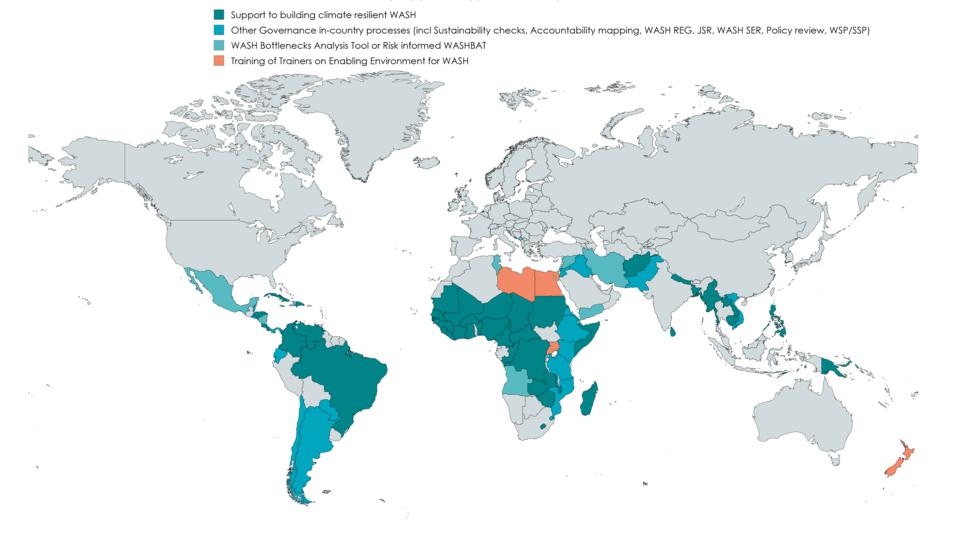
WASH Governance group process supported with Unicef, 2020-2025
More about our Unicef programs
Accountability for sustainability
Today, 1.42 billion people – including 450 million children – live in areas of high or extremely high-water vulnerability. Poor management of groundwater and contamination of freshwater supplies have exacerbated water stress. At the same time, demand for water is rising due to rapid population growth, urbanization and increasing water needs from a range of sectors.
Climate change is also compounding water scarcity through changing precipitation patterns and increased water demand. System building and strengthening are vital to achieve sustainability and enhance resilience of services.
UNICEF and former SIWI WASH department have a history of working together to strengthen systems that deliver and sustain services since 2014. In the next 3 years, from 2025 to 2028, this partnership is proposed to continue strengthening the enabling environment (EE) towards the realization of the Human Rights to Water and Sanitation (HRWS) in the context of climate change, systematically within UNICEF WASH programming at global, regional and national level. It is demand driven and services are provided on request by NY Headquarters (HQ), Regional Offices (ROs), and Country Offices.
In this programme, IVL provides technical assistance and capacity development to UNICEF headquarter, regional and country offices, national and local governments, in order to build a better enabling environment for appropriate delivery of water and sanitation services.
Since its inception in 2014 (with SIWI WASH department), the programme has been rolled out across the world.
This programme seeks to secure and sustain WASH service delivery in the context of climate change pressures and other non-climatic shocks and stresses. This will be done through supporting knowledge generation, capacity building and advocacy, and in country support
IVL WASH works in:
Global partnership
Our team offers technical support, knowledge, and training to strengthen UNICEF’s WASH activities in South Asia, Europe and Central Asia. Our expertise also focuses on capacity-building, knowledge generation, implementation, and dissemination of results.
East Asia and the Pacific
Under this programme, the team also provides support on system strengthening and climate resilience to UNICEF country offices in East Asia and Pacific islands.
Latin America and the Caribbean
Access to water and sanitation is unfairly distributed in Latin America and the Caribbean, with poor populations often forced to pay much more than more affluent citizens for services of substantially lower quality. Our support is directed at UNICEF’s regional offices and country offices, and aims to improve accountability and long-term sustainability within the WASH sector.
Middle East and North Africa
The Middle East and North Africa is the world’s most water-scarce region. Here the Accountability for Sustainability Programme focuses on strengthening the management of water in the region, at both country and local levels.
West and Central Africa
Under this programme, the team also provides support on system strengthening and climate resilience to UNICEF country offices in West and Central African countries.
For more information, contact:
Ricard Gene, Expert, ricard.gene@ivl.se
Support climate shift and governance in the WASH Sector
This global programme strengthens WASH systems and governance in over 50 countries, helping UNICEF and partners deliver sustainable, inclusive, and climate-resilient water, sanitation and hygiene services, especially for the most vulnerable.
Access to water, sanitation, and hygiene (WASH) services is fundamental to Sustainable Development Goal 6 (SDG 6) and critical for achieving other SDGs and realising the human rights to water and sanitation. However, 2.2 billion people still lack safely managed drinking water, and 3.5 billion lack safely managed sanitation. Weak governance, systemic bottlenecks, and poor service sustainability persist as key challenges, with 30–50% of WASH projects failing within 2–5 years. The global burden is particularly heavy on vulnerable populations, including women, girls, and people with disabilities.
To respond, UNICEF aims to support 450 million children and their families with water security solutions by 2030. Achieving these goals requires strong systems and governance. The programme "Support climate ‘shift’ and governance in the WASH Sector" is the flagship initiative of the UNICEF-IVL partnership, launched in 2025. It builds on a decade-long collaboration between UNICEF and SIWI, now hosted at IVL, which brings proven expertise, regional presence in Latin America and in MENA, and integrated water-climate technical capabilities.
The programme supports more than 80 sector processes in 50+ countries by strengthening WASH governance and accountability, improving enabling environments, and building institutional capacity. Interventions are demand-driven and include technical support to UNICEF headquarters, regional and country offices, as well as in-country missions. The programme also supports the development of tools, knowledge products, and global advocacy efforts.
Activities span regulation and monitoring, service delivery models, sustainability checks, and inclusive planning for schools, health facilities, and fragile contexts. Regional initiatives in the MENA region, Latin America and the Caribbean, East Asia and the Pacific, and West and Central Africa deepen the programme's impact through targeted support and learning exchange.
By embedding equity, inclusion, and resilience into WASH systems, the partnership helps countries close service gaps, reach the most vulnerable, and build sustainable and climate-resilient services.
Support climate ‘shift’ and governance in the WASH Sector
Period: 1 March 2025 – 1 March 2028
Budget: 4.49 million USD
Funded by: UNICEF
Project partners: UNICEF, IVL Swedish Environmental Research Institute, national and local governments, regulators, service providers, civil society, academia
For more information, contact:
Alejandro Jiménez, Group manager, and Ricard Gene, Expert
Strengthening climate rationales for resilient WASH systems
This global programme supports UNICEF and partners to address climate risks in WASH systems across six countries, helping build inclusive, resilient, and sustainable services through assessments, capacity building, knowledge generation, advocacy, and climate-informed planning.
Climate change is intensifying water and sanitation-related risks, putting fragile WASH systems and vulnerable populations at even greater risk. In 2023, the world recorded its hottest year, with unprecedented stress on global water cycles. As floods, droughts, and other climate hazards increase in frequency, intensity, and geographical coverage, climate resilience is no longer optional for the WASH sector.
The programme "Supporting the climate shift and climate rationales for climate-resilient WASH services" is part of the EU-funded initiative "Beyond Pipes and Toilets" and a strategic component of the UNICEF-IVL partnership. It aims to support at least six UNICEF Country Offices between 2025 and 2027 in strengthening their climate rationales and ensuring WASH services are resilient, equitable, and responsive to future risks.
Building on tools and methodologies developed under the UNICEF-SIWI collaboration, and now hosted at IVL Swedish Environmental Research Institute, the programme delivers tailored support to countries. It involves reviewing national climate and WASH policies, conducting climate risk and vulnerability assessments, and identifying appropriate solutions to strengthen climate resilience in WASH services. In parallel, the programme helps national stakeholders develop climate rationales and draft funding proposals through training on climate finance. It facilitates the inclusion of WASH in national climate commitments such as NDCs and NAPs, and supports the piloting and implementation of prioritised climate-resilient WASH interventions. Through all stages, IVL contributes to evidence generation and the development of practical guidance to inform fundraising, planning and policy.
The programme promotes a participatory, country-driven approach and encourages local ownership by partnering with civil society, academia, government institutions, UN agencies, and donors.
This work aligns with UNICEF’s global priorities and directly contributes to the achievement of SDG 6. It helps operationalise climate resilience ambitions outlined in the UAE Global Climate Resilience Framework adopted at COP28, while building institutional capacity for sustainable and climate-resilient WASH service delivery.
Supporting the climate shift and climate rationales for climate-resilient WASH services
Period: 1 March 2025 – 31 May 2027
Budget: 435,781USD
Funded by: UNICEF
Project partners: UNICEF, IVL Swedish Environmental Research Institute, national and local governments, regulators, service providers, civil society, academia
For more information, contact:
Alejandro Jiménez, Group Manager, and Ricard Giné, Expert
Strengthening the enabling environment to address water scarcity and climate change impacts on WASH in the MENA region
As part of his partnership with UNICEF, IVL developed the WASH-Ser tool, a structured methodology for analyzing water and sanitation service provision. It provides a consistent framework to evaluate service levels, identify gaps, and guide improvements in policy, planning, and implementation.
Achieving universal access to safe water and sanitation requires not only infrastructure but also reliable, efficient, and sustainable service provision. In many countries, context and institutional arrangements make it difficult to compare service providers’ performance, identify weaknesses, and plan effectively. To address this gap, UNICEF tasked SIWI and IVL with developing a harmonized methodology for service delivery analysis.
The WASH-Ser tool examines both context and practices of service delivery and brings them together in a clear assessment framework. This enables governments, regulators, and development partners to identify performance gaps, prioritise interventions, and strengthen accountability.
Piloted in several countries, the tool has proven adaptable to different institutional and data environments. The WASH-Ser methodological guide is designed as a practical resource to inform advocacy, guide policy reforms, and support the development of sustainable WASH services.
The guide is available here External link, opens in new window.
Water, Sanitation and Hygiene Service Delivery Models tool (WASH-Ser)
Period: 2017-2025
Budget: N/A
Funded by: UNICEF,
Project partners: IVL, Stockholm International Water Institute
For more information, contact:
Bruno Le Bansais, Manager, bruno.lebansais@ivl.se
Systems strengthening for climate-resilient, sustainable WASH in the WACRO region
Up to half of WASH interventions break down within just 2–5 years. The consequences are severe – undermining health, economies, and the environment, while blocking progress toward universal WASH access. The main issue isn’t technology, but weak governance that erodes public service delivery. Across Africa, millions still lack clean water and sanitation. Nearly 40% of people have no safe drinking water, and about 70% live without sanitation facilities. In West and Central Africa – especially in countries facing conflict and instability, the situation is even more critical.
Our programme, delivered by IVL with UNICEF (regional and country offices), tackles these challenges by strengthening WASH systems through better governance, accountability, capacity development, and climate resilience. Building on over a decade of UNICEF–SIWI collaboration, it now continues under IVL’s WASH Governance Group—bringing both continuity and fresh innovation to address sustainability and climate risks.
Stronger WASH systems, resilient to climate change
This programme combines systems strengthening with climate resilience, aligned with UNICEF’s global strategies including the Climate Shift. Support is demand-driven and tailored to the needs of UNICEF offices, governments, and partners.
Rather than creating parallel processes, we build on existing systems – embedding governance (including accountability), mobilising climate finance, and aligning WASH priorities with broader climate and development goals.
What we do
- Regional help desk support: We provide rapid, on-demand technical assistance to UNICEF country offices across the WCA region, ensuring timely responses to local needs and challenges.
- Regional studies: We provide technical assistance for regional studies on resilience and groundwater governance.
- Governance strengthening: We work with governments to improve WASH policies, strengthen regulations, build effective coordination mechanisms, and enhance monitoring systems – helping ensure accountability and long-term sustainability.
- Climate-resilient WASH services: We support countries in shifting WASH systems to better withstand water scarcity, floods, and extreme weather – reducing risks for communities and safeguarding essential services.
- Sector analysis tools: Using and adapting tools such as the WASH Bottleneck Analysis Tool (WASH-BAT), sector wide sustainability checks, accountability mapping, WASH Service delivery model tool (WASH-SER), we help governments identify barriers, track progress, and inform national strategies.
- Capacity development: We build expertise in Systems strengthening, climate risks, and climate finance through formal training programmes, webinars, peer learning, and blended learning approaches.
- Cross-sectoral approaches: We integrate WASH with broader agendas such as Climate Landscape Analyses for Children – promoting joined-up solutions to complex challenges.
- Equity and gender integration: We embed gender-transformative approaches and ensure that women, youth, people with disabilities, and vulnerable groups are actively included in decision-making and service delivery.
- Knowledge generation and advocacy: We capture lessons through reports, policy briefs, and academic publications, sharing evidence that strengthens advocacy and shapes policy at regional and global levels.
Next steps and continuity
- Country-level support: Technical assistance to at least fifteen countries, supporting over 25 in-country sector processes on governance and climate resilience.
- Regional-level support: Technical assistance to regional study on resilience looking at the contribution of WASH into community resilience in the Sahel and piloting a groundwater governance tool in the region.
- Regional learning events: Delivery of training workshops, webinars, and e-learning modules to build regional capacity and share knowledge.
- Knowledge products: Publication of learning briefs and academic papers on WASH governance, climate resilience, and systems strengthening.
UNICEF WCARO
Period: August 2025 – December 2027
Budget: 1 107 168 USD
Funded by: UNICEF
Project partners: UNICEF, IVL
For more information, contact:
Antoine Delepiere, Senior Manager, antoine.delepiere@ivl.se
Systems strengthening for climate-resilient, sustainable WASH in the EAPRO region
Universal access to safe water, sanitation, and hygiene (WASH) is central to SDG 6 and critical for health, education, and economic development. Yet sustainability remains a challenge: 30–50% of WASH projects fail within 2–5 years, often due to governance and systemic weaknesses rather than technical gaps. In the East Asia and Pacific (EAP) region, millions of children face high exposure to water scarcity, flooding, and climate-related hazards.
Building resilience requires strong governance, effective systems, and inclusive approaches that prioritise the most vulnerable.
This programme, delivered by IVL in partnership with UNICEF, strengthens WASH systems in the region through governance, accountability, and climate resilience. It builds on more than a decade of UNICEF–SIWI collaboration and now continues under IVL’s WASH Governance Group, ensuring continuity and innovation in addressing climate and sustainability challenges.
The programme combines systems strengthening with climate resilience, aligning with UNICEF’s global strategies and the Climate Shift initiative. Support is demand-driven, with tailored technical assistance provided to UNICEF Regional and Country Offices, governments, and partners.
Rather than creating new processes, the programme builds on and strengthens existing systems, helping countries embed governance and accountability functions, mobilise climate finance, and align WASH priorities with broader climate and development agendas.
Activities
- Regional help desk support: Providing timely, demand-driven technical assistance to UNICEF country offices across the EAP region.
- Governance strengthening: Supporting countries to improve WASH policies, regulation, coordination mechanisms, and monitoring systems.
- Climate-resilient services: Assisting country offices in transitioning WASH systems towards climate resilience, reducing risks from water scarcity, floods, and extreme weather events.
- Sector analysis tools: Applying and adapting methodologies such as the WASH Bottleneck Analysis Tool (WASH-BAT), sustainability checks, and accountability mapping to inform national sector processes.
- Capacity development: Building expertise in governance, accountability, climate risk analysis, and climate finance through formal training, webinars, and blended learning approaches.
- Cross-sectoral approaches: Supporting intersectoral work such as Climate Landscape Analyses for Children, and addressing emerging priorities including solid waste management, renewable energy, and pollution.
- Equity and gender integration: Embedding gender-transformative approaches and leave-no-one-behind principles into WASH governance processes, ensuring inclusion of women, youth, people with disabilities, and vulnerable groups.
- Knowledge generation and advocacy: Producing reports, policy briefs, and academic publications to capture and disseminate lessons on WASH systems strengthening and climate resilience.
UNICEF EAPRO
Period: May 2025 – December 2027
Budget: 516,949 USD
Funded by: UNICEF
Project partners: UNICEF, IVL
For more information, contact:
Tom Heath, Manager, tom.heath@ivl.se
Systems strengthening for climate-resilient, sustainable WASH in the LACRO region
Universal access to safe water, sanitation, and hygiene (WASH) is central to SDG 6 and critical for health, education, and economic development. Yet sustainability remains elusive: 30–50% of WASH projects fail within 2–5 years, often due to governance and systemic weaknesses rather than technical gaps. In Latin America and the Caribbean (LAC), water and sanitation services remain inequitable, with low-income populations often paying more for services of lower quality.
At the same time, millions of children are increasingly exposed to water scarcity, flooding, and other climate-related threats. Tackling these challenges requires more than infrastructure. It demands inclusive approaches, strong governance, and resilient systems that put the needs of the most vulnerable—especially children—at the center of water and sanitation solutions.
This regional programme, delivered by IVL in partnership with UNICEF LACRO, supports WASH systems strengthening in the region through a focus on governance, accountability, and climate resilience. It builds on over a decade of collaboration between UNICEF and SIWI, and now continues under IVL’s WASH Governance Group, ensuring both continuity and innovation in addressing climate and sustainability challenges.
This programme combines systems strengthening with climate resilience, aligning with UNICEF’s global strategies and supporting its mandate to ensure that every child has access to a safe and clean environment. Support is demand-driven, offering tailored technical assistance to UNICEF Regional and Country Offices, governments, and partners.
Rather than creating parallel processes, the programme reinforces and builds on existing systems — helping countries institutionalize governance and accountability functions, mobilize climate finance, and align WASH priorities with broader climate and development agendas. The result: WASH services that are not only sustainable, but also adaptive to increasing environmental risks.
What we do:
- Regional help desk support: We provide rapid, on-demand technical assistance to UNICEF country offices across the LAC region, ensuring timely responses to local needs and challenges.
- Governance strengthening: We work with governments to improve WASH policies, strengthen regulations, build effective coordination mechanisms, and enhance monitoring systems, helping ensure accountability and long-term sustainability.
- Climate-resilient WASH services: We support countries in shifting WASH systems to better withstand water scarcity, floods, and extreme weather—reducing risks for communities and safeguarding essential services.
- Sector analysis tools: Using and adapting tools such as the WASH Bottleneck Analysis Tool (WASH-BAT), the WASH Regulation Approach Tool (WASH REG), the Accountability Mapping, the WASH Service Delivery Model Tool (WASH-SER), we help governments identify barriers, track progress, and inform national strategies.
- Capacity development: We build expertise in systems strengthening, climate risks, and climate finance through formal training programmes, webinars, peer learning, and blended learning approaches.
- Cross-sectoral approaches: We integrate WASH with broader agendas such as Climate Landscape Analyses for Children —promoting joined-up solutions to complex challenges.
- Equity and gender integration: We embed gender-transformative approaches and ensure that women, youth, people with disabilities, and vulnerable groups are actively included in decision-making and service delivery.
- Knowledge generation and advocacy: We capture lessons through reports, policy briefs, and academic publications, sharing evidence that strengthens advocacy and shapes policy at regional and global levels.
UNICEF LACRO
Period: August 2025 – August 2028
Budget: 1 365 994 USD
Funded by: UNICEF
Project partners: UNICEF, IVL
For more information, contact:
Jovana Garzón Lasso, Manager, jovana.garzon@ivl.se
More information about our work

Projects
Learn more about ongoing and previous work.
Resources
See published reports in the Diva portal.
Contact us for more information about WASH

Alejandro Jiménez
Group Manager WASH Governance
Located in Stockholm, Sweden
alejandro.jimenez@ivl.se

Manal Shraideh
Regional Office WANA Manager
Located in Amman, Jordan
manal.shraideh@ivl.se

Sirly Castro
Regional Office LAC Manager
Located in Bogotá, Colombia
sirly.castro@ivl.se