
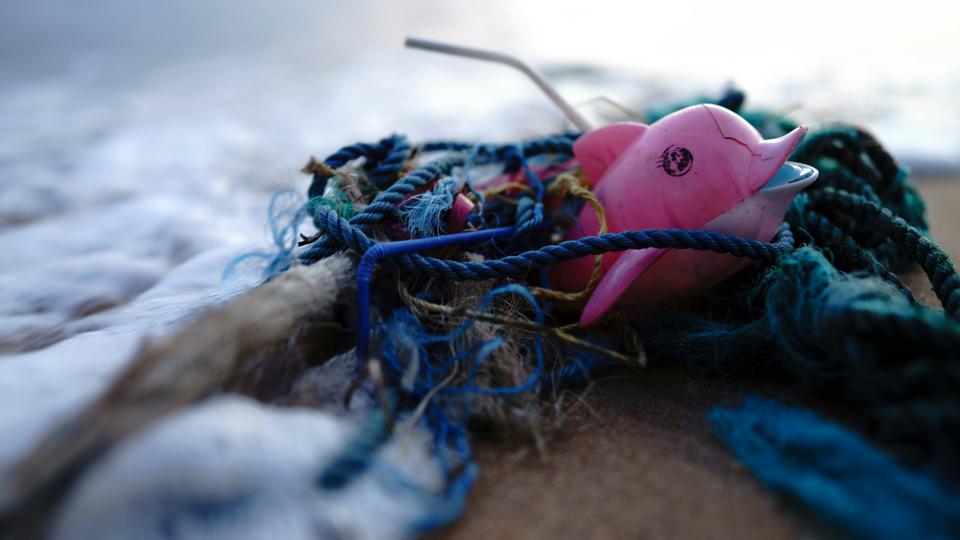
Beach litter must be removed before it turns into microplastic
Candy wrappers, plastic bags, ropes and fishing nets that wash up on our shores – regardless of whether they originally come from land or sea – can quickly break down and form microplastics.

Plastic that washes up on beaches may look unchanged, but it begins to degrade immediately. The sun’s UV radiation, temperature fluctuations, wind, and abrasion from sand and waves cause the material to gradually lose its strength. Something that looks intact may already be about to break down.
The plastic weakens continuously. Once it becomes brittle, a small amount of force is enough to cause it to break and start to spread
, says Anna-Sara Krång, researcher at IVL Swedish Environmental Research Institute and study leader.
In field trials on the Swedish west coast, researchers placed common plastic litter such as candy wrappers, plastic bags, polystyrene, ropes and fishing nets on beaches, and monitored their changes under natural conditions over a two-year period. The analyses show that they deteriorate rapidly. After just six to twelve months, many plastic items have already lost much of their tensile strength. What begins as discolouration and small cracks quickly develops into the plastic fragmenting into smaller pieces.
Candy wrappers lost over 70 per cent of their tensile strength after just one year, and within two years, large sections had disintegrated
, says Anna-Sara Krång.
Mistaken for food
When plastic degrades, it forms small particles that are easily spread by wind and water, and ingested by animals in the intertidal zone and in the sea. These particles can be mistaken for food and end up in the gastrointestinal tract, where they can cause blockages, create a false sense of fullness or affect the energy balance. At the same time, the plastic may contain harmful additives that are released and affect the organisms.
Even plastic items such as ropes and fishing nets, which may remain in place for long periods and appear relatively undamaged, are in fact, over time, an ongoing source of smaller particles.
Our analyses showed almost no chemical degradation; plastic breaks down physically long before it breaks down chemically. This means that microplastics can form quickly but remain in the environment for a long time
, says Anna-Sara Krång.
As a result, beaches are not just places where litter accumulates, but also where microplastics are formed and can be carried out to sea and into food chains. This means that early action is crucial. Before the plastic becomes brittle, it can be collected as whole items, but as time goes on, its spread increases rapidly and becomes harder to stop.
Read the study: Following degradation and fragmentation of plastic litter over two years' weathering on Swedish beaches - ScienceDirect External link.
For questions, contact:
Anna-Sara Krång, anna-sara.krang@ivl.se, tel. +46 (0)10-788 69 12
The research project Från strandskräp till mikroplast (in English: From beach litter to microplastics) has been funded by Formas and carried out by IVL Swedish Environmental Research Institute in collaboration with RISE and Havets hus in Lysekil.